Reading is fun, except for all those words

I was helping my 1st grade son with his homework. This isn’t the perfect bonding exercise, as he does not like doing his homework and I do not enjoy watching him not like doing his homework. It leads to impatience in my voice, which he likes almost as little as he likes doing his homework.

Earlier this year, as I was dragging him out of bed for school, he told me, “I don’t like learning. It’s not really fun for me.” Dragging him out of bed in the morning is not really fun for his parents, but I suppose that’s an issue for another day.

Part of his homework that night was a questionnaire from his reading teacher. I guess she wanted to get a feel for each child’s attitude about reading before getting too far into the year. My son is a pretty good reader, when he has to be. And when he doesn’t have to be, he’s playing with LEGOs.

When it comes to reading practice, he’s lazy. I could compare him to a mule or other reluctant worker, but that’s not quite strong enough. The only simile that fully captures it is: he’s as lazy as a six-year-old.

The first question on the homework was: “Reading is _________”

The boy thought about it for a second, then filled in the word fun.

I raised an eyebrow. “Really? You don’t act like reading is fun.”

“Reading is kind of boring. But I think this is what the teacher wants me to say,” he explained.

It would be hypocritical of me to make him change his answer, since much of my own school career was based upon political expediency.

What books?

He loves going to the library. They have fun toys and games there, and you can even borrow Sponge Bob videos.

He answered a few more questions about his favorite subjects to read before he got to the question: “The best thing about reading is _________”

He didn’t have to think about it at all. He quickly went to work answering the pictures.

This didn’t sound much like a reading is fun kid, but maybe you can like to read and still like the pictures even a tiny bit more than the text. I let it go.

The next question was: “The worst thing about reading is _________”

He didn’t miss a beat. “The words,” he said, quicker than he could touch his pencil to the paper.

I had to slow him down this time. If you are going to start off playing this game of hiding your opinions behind the expected preferred opinions, then you ought not directly contradict yourself by letting your true feelings out later.

I should have let him look foolish with his incongruous answers, but I was in no mood to be dragged down with him.

We discussed it and decided the hard words made a better answer.

So it boils down to this: reading is fun, especially when accompanied by numerous illustrations, but the enjoyment can be diminished by an overabundance of difficult passages.

That sounds like a perfectly reasonable opinion, doesn’t’ it?
 

Forget about the gold, we’re going for the purple

We may have experienced a minor breakthrough.

Being a five-year-old boy, our son likes to play when he should be doing work in school. Throughout autumn, he got better at focusing on his work, mostly through the skilled guidance of his teacher, but also with our encouragement.

Then Christmas break hit, followed by a parade of snow days. The routine of school became hodge-podge. His attention to school responsibilities regressed. We started getting disappointing reports from his teacher.

He lost privileges at home. This got his attention, but it wasn’t so good at holding it when he was in school.

There’s a color chart in his class. Everybody starts on green. With good behavior, kids can be promoted to orange, then blue, and finally purple – the pinnacle conscientious pupil-hood. Behaving poorly can sink them through yellow into red.

Our son took a few tastes of red. Friends suggested that maybe he was bored in school. Okay, bored is an excuse when you’re a super-genius whose talents lie three grades ahead. Bored is not an excuse because school work is more boring than play. He’s a bright kid, but I believe a super-genius would have mastered telling time by now.

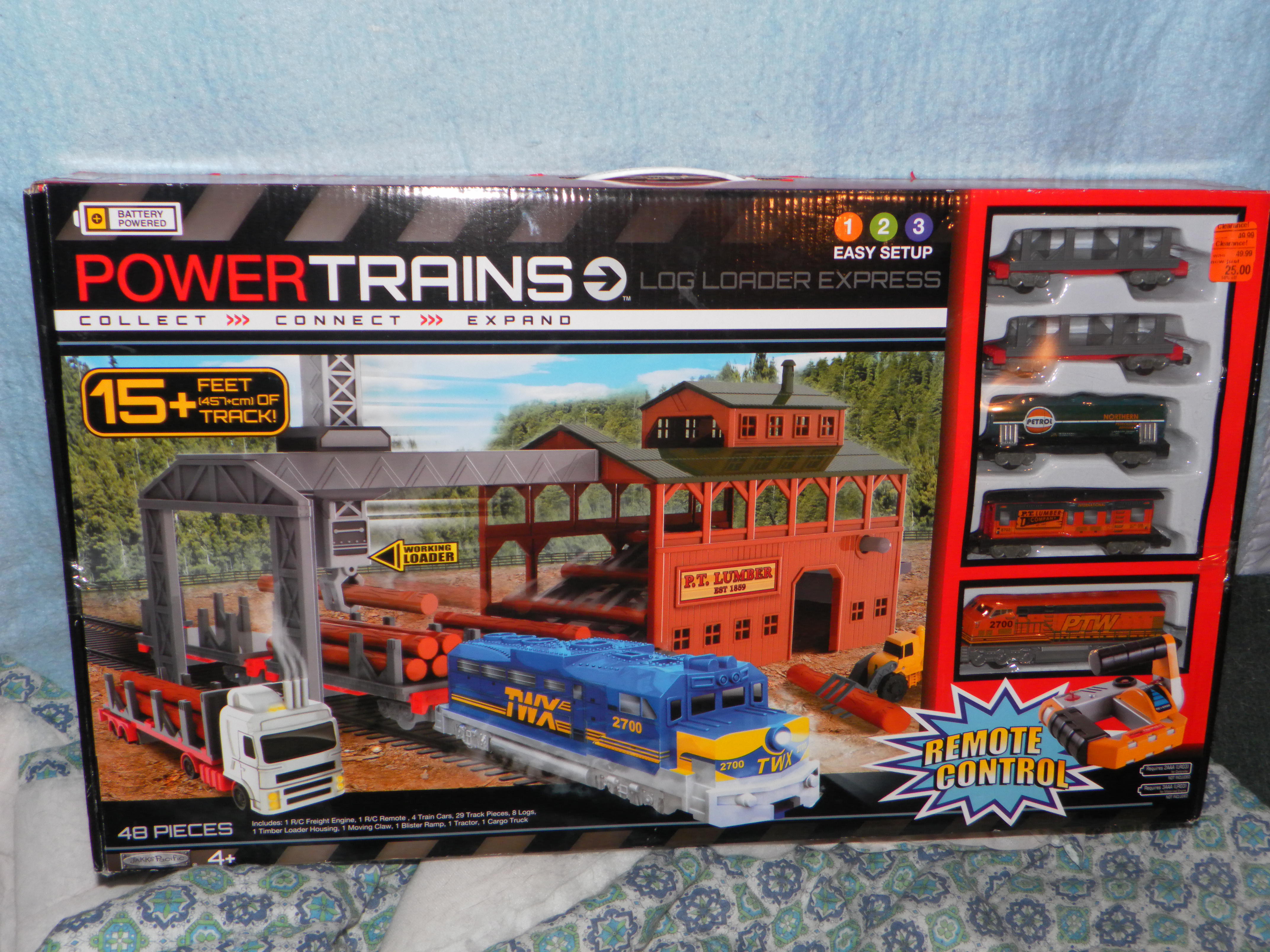
One day we found an add-on to his train set on clearance at the store. At 75% off, we couldn’t pass it up, but we lacked an occasion for him to get it. We made a deal. If he stayed on orange for a whole week, he could have it. If not, I’d return it to the store.

75% off! Like I was going to return that? So some other parent could bag that deal? I’d keep that thing in the basement until he was 50, if it took that long to earn it. But he didn’t know that.

The best wedding gift ever.

If the boy doesn’t get to purple, this may end up being his wedding gift.

The next day he jumped to orange, and brought home a golden ticket. His mom and I gave him high fives and did celebratory dances. The next two days brought more orange, high fives, hugs, and dancing. Best of all were his proud smiles.

On the fourth day, he slipped back to green. I’m sure it was all a misunderstanding, but what was done was done. I said I’d give him another chance. If he made it to purple one time, he could have the train.

Funny thing though, he didn’t seem so concerned with the train. He seemed more interested in making his parents proud.

The next week, he fluctuated between orange and green. Then, one day, I was greeted with the news that he’d reached blue. There was much rejoicing. He didn’t mention the train.

The next day, as I hugged him goodbye in the morning, he asked, “What would you do if I got on purple today?”

“I’d be so happy that my head would just about blow up.”

He laughed. I think he’s close. There’s a train at stake. But most of all, it’s a chance to blow up his dad’s head with pride.

It’s party time! Again.

After my First Communion, my family went out to celebrate. At McDonald’s.

McDonald’s! How awesome was that? It had to be a pretty special occasion to celebrate at McDonald’s.

Not only was McDonald’s the only fast food restaurant in the area, it was the only restaurant where I can remember eating until my teen years. Going there was a rare and enormous treat.

A few years after my First Communion, I got invited to a friend’s birthday party at McDonald’s. This was mind-blowing on multiple levels. First: a birthday party? Birthdays were when you got to pick what your mom would make for dinner, you ate some cake, and received one present from your parents. What was this crazy talk about having your friends come to your birthday? And they all brought presents, too? No way!

And celebrating a birthday at McDonald’s? McDonald’s was ground too hallowed for a mere birthday celebration. McDonald’s was for big, once-in-a-lifetime deals, like the Sacraments. I’m sure I could easily imagine couples having their wedding receptions there (if they were high-class enough to meet McDonald’s standards).

Despite my misgivings, I went to the party. Hell yeah, I went! I wasn’t about to miss a precious opportunity to enjoy the gourmet offerings of that palace of delicacies.

The party was short and sweet. We had burgers, fries, and some cake. The Birthday Boy opened our modest gifts, and then we went home. It was the single birthday party experience of my childhood.

My oldest son is five. He has been the focus of three birthday parties and a guest at dozens. None of them have been at McDonald’s. Oh, how the mighty have fallen!

Times have changed, leaving middle-aged bumpkins like me wondering what to make of things. McDonald’s has gone from treat to last resort. Birthday parties crowd the outside edges of our calendar.

Though it sometimes feels as though our weekends are drowning in kids’ parties, I can’t complain. To the extent that it is a problem, I’m a part of the problem. We play the party game too, and we do it without trying to make anybody eat at McDonald’s.

I hate cake!

We think we have a lot of parties, but they have to do this five times in each of our human years. (Image: Harry Whittier Frees)

I’m all about giving my kids good childhood memories, but sometimes I worry that these automatic birthday parties will lead them to believe that watching the calendar page flip a dozen times is a superstar accomplishment. When you’re 105, it may be, but you’re 005, it’s been done by plenty of other normal folks.

Then again, opening my mouth wide and letting a priest put a dried circle of bread on my tongue wasn’t the mark of superstardom either – those wafers dissolve in your mouth; you don’t even have to chew your way to success. Yet, I got what was, at the time, the best reward I could imagine for it. And after a few more birthdays, my son will have outlived my Catholicism, so I guess I’m the last one worthy to complain about undeserved honors.

So let’s party!

Should I immunize my child against the scourge of adverbs?

One Saturday morning, our kindergartener was watching cartoons when one of the toy commercials that saturate children’s programming came on. I don’t remember what the toy was, but it doesn’t matter; just as he does in response to every other toy commercial, my son told me that he wanted it. He’s like fish in a barrel to toy advertisers. They never miss him.

This commercial must have made the toy look exceptionally fun, because the boy added emphasis to his desire. “Daddy, I want that really badly,” he said.

His statement left me with mixed feelings – not the part about him wanting the next random toy that was advertised. I know how I feel about that; I don’t like it.

My mixed feelings were about his word usage. At first, I was pleased at his understanding of the adverb form. I was happy that he didn’t say, “I want that real bad.”

I could only afford to be impressed for a moment, though, before the word really began raining on my parade. Really is most often a wasted word. We all, including me, use it too much. Nine times out of ten, it adds nothing to the sentiment. “I want that badly,” would have conveyed the depth of his desire just as well. Omitting really doesn’t make me think he wants it the opposite of really badly; I’m not left wondering if he wants it fictitiously badly.

Then, I thought about his choice of the word badly, and the clouds burst above my proud Papa parade. Adverbs take up a lot of space in our sentences without doing much to earn their place. Of the total, questionable population of adverbs, badly is a bad one. I guess it has its place in statements like: “The child expressed his desire badly.” But when you want to use an adverb to add emphasis to a desire, isn’t it better to use one like dearly?

What does it even mean to say you want something badly?


barrier parenting

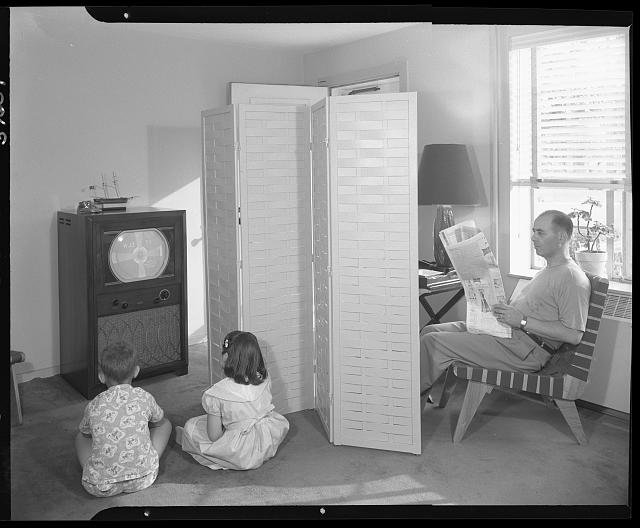
“You’ve erected a barrier between us with your constant desire for toys and your inefficient use of language.” (Image: Gottscho-Schleisner)


This is what too much writing gets you. Sometimes it brings rain to parades that should be clear skies and sunshine, as this one should have been. “I want that really badly,” is a fantastic use of language for a five-year-old. Moreover, what five-year-old is ever going to say, “I want that dearly.”? What 50-year-old says that? The only person I know who would say something goofy like that is neither five nor 50, but he reads too much Victorian era literature.

In the end, I am proud of the boy’s grammar, although I wish he would go back to his simple, “I want that,” at the end of every toy commercial. It’s concise and it will disappoint him no worse than “I want that really badly,” will when he doesn’t get the toy.

Meanwhile, I am happy that I didn’t vocalize my mixed feelings. They were misguided, and I wouldn’t like to embarrass myself speaking such unnecessary words in front of my son.