Happy birthday, little Wahoo Wahoo

The baby is turning one. He’ll be a toddler soon. The other day, he stood up by himself for almost 10 seconds.

It’s hard to believe it’s been a whole year since this insane night:

Dispatches from the Delivery Room, Part 2: Dr. Jekyll and Mr. Labor Pain

In that year, the child has been known by many names. There have even been the rare occasions when we have called him by his given name. His current nickname is Wahoo Wahoo. That is the onomatopoeia we use to describe his cry of parental manipulation.
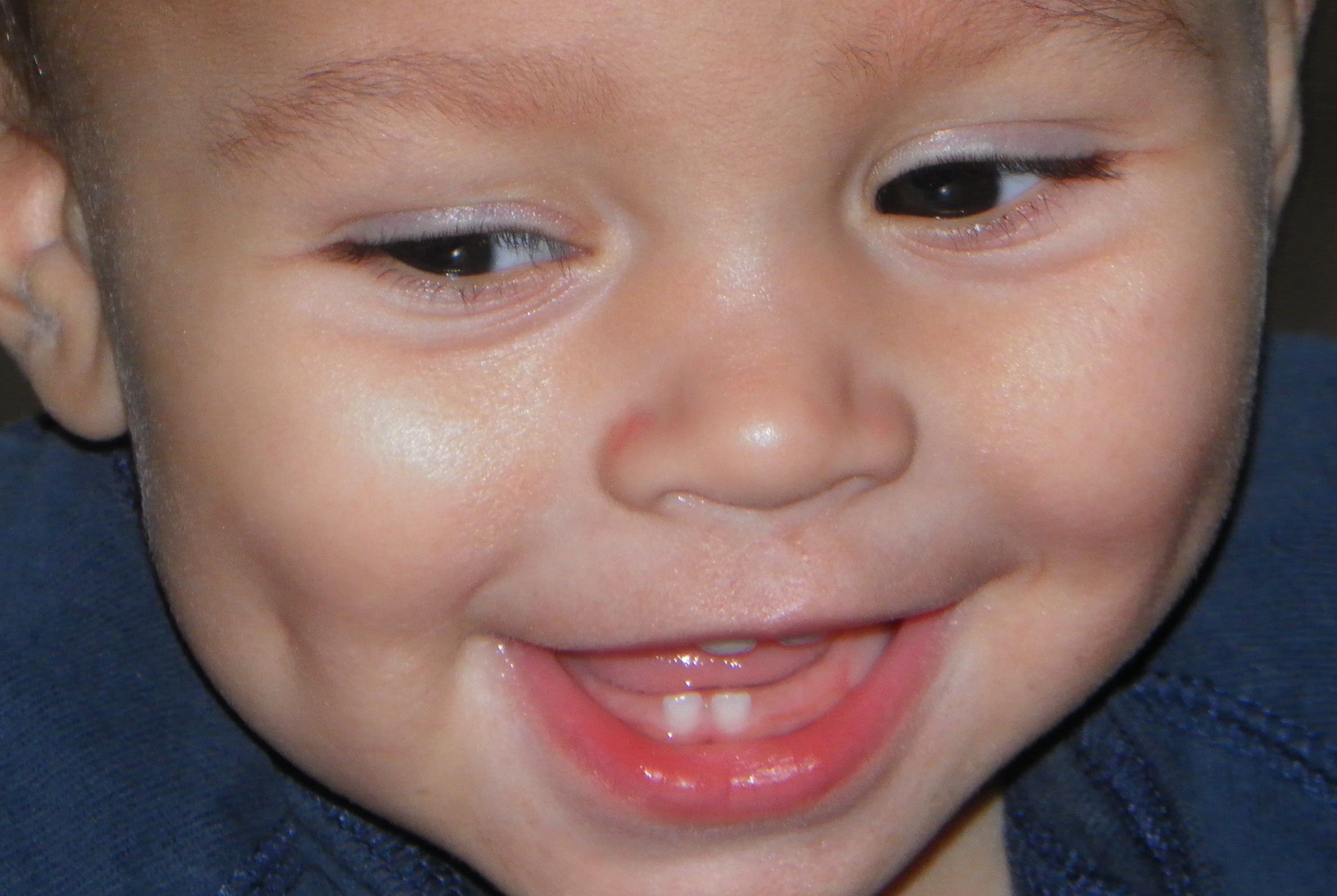
teeth and dimples smile

Four teeth + two dimples = one great year!

For example, if my wife tells me, “I tried to put him down for a nap, but that didn’t last long.”

And I ask, “What did he do?”

She rolls her eyes and mimics: “Wahoo, Wahoo.”

Here are some of the other nicknames he’s sported over the past year:

Ginger and his brother, Mary Ann: a nicknaming debacle

He’s a good baby, but I’m ready for him to grow out of some of his baby hang-ups. I’ve never known an infant who hates riding in the car as much as Wahoo Wahoo does. He screams about being in a car like Daddy screams about being on an airplane; it’s a most unbecoming display. Maybe when he’s one and we put him into the forward-facing, big-boy seat, he’ll be less put out by the experience. They say it’s safest to keep him facing backward until he outgrows that seat, but I think it’s safest to have him in a car where the driver is not always distracted by inconsolable wailing directly behind his head.

Wahoo Wahoo begins his second year of life with four very sharp teeth and more hair than any three other toddlers combined. He has had his four front teeth for several months now without sprouting a fifth tooth. His attitude seems to be, “Who needs grinding? As long as I can bite good and hard, I’m good.”

This is a bit about the trouble caused by his first tooth.

A Land Shark is born: baby’s first tooth

He was born with a healthy thatch atop his head and it has grown skyward ever since. I am happy to report that the back of his head is now getting its share of hair too. For a while, the top was full, but the back and sides were very sparse, giving him the exact opposite hairstyle as his daddy.

If Don King and Cosmo Kramer had a baby:

The little kid with the big wig

For my wife, this birthday is bittersweet. Mothers seem to want their babies to always stay babies for some reason. Dads want their kids to grow quickly into sensible youngsters who can be threatened into keeping quiet when the big game is on.

Even so, I think I will miss some of his baby characteristics. Very soon, he will be walking. That will mean the end of the pitter-patter of his little hands and knees as he run-crawls to greet me when I come home from work. I’m all in favor of progress, but I’m pretty sure I’ll miss that.
Don’t let your own spittle get the best of you

Now that my son brushes his teeth by himself, I think nostalgically about what he used to say whenever he reached some developmental milestone. When congratulated upon his accomplishment, his eyes would beam pride and he would say, “I’m getting a big boy.”

The words, “I’m getting a big boy,” always made it sound as if he were heading down to the Big Boy Shelter to pick out a big boy of his very own. If there is truly such a place as the Big Boy Shelter, I would like to know about it, because there are some days when I would like to drop him off there. But he’s had all his shots, he’s good with children, and my wife has grown attached to him, so I guess I’ll keep him.

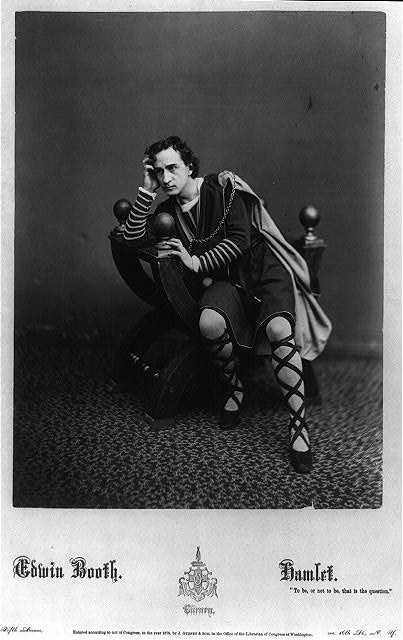
Of course, he meant, “I’m getting to be a big boy,” but at the time, even the simplest verb in all language, unprocessed by conjugation, thwarted him. It was nothing to be ashamed of; the same simple verb flummoxed Hamlet, and he got to be famous, in spite his inability to come to terms with it.

Hamlet

Contemplating basic verbs. I always do my best pondering when I’m holding my thinking skull. Maybe this guy should get one of those.

My son has since gotten to be a big boy. But big boys still have their troubles. My big boy encounters one of his most vexing troubles occasionally while brushing his teeth. This is the psychological torture caused by a dangling string of spittle.

Nine out of ten times, the boy can rinse and spit without any terrifying results. Yet, every once in a while this process leaves that tenacious thread of spittle hanging from his mouth. This is horrifying to him. He would rather examine the baby’s dirty diapers than touch a thread of saliva from his own mouth. This goes for touching it with his toothbrush as well.

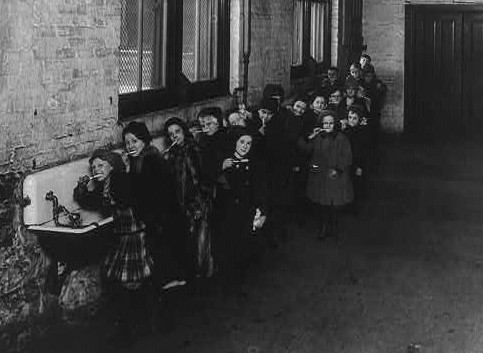
group tooth brushing

“Spittle can’t harm us as long as we stick together. Now, you boys in the back just wait patiently; the girls are almost finished and a toothbrush will come available presently.” (Image: Frank P. Burke)

Whenever his spittle clings to him, as it stretches its disgusting length toward the sink, he freaks. He makes moaning and groaning and whining sounds as he first shakes, then bobs, his head in a frantic effort to free himself of the horrifying link.

Of course I’m laughing, so I’m no help.

My laughter only makes him more furious. How would you feel if there were a rattle snake, hanging by fangs stuck into your lower lip, and your dad just stood there and laughed?

But if his spit is too nasty for him to touch, I’m not getting near it.

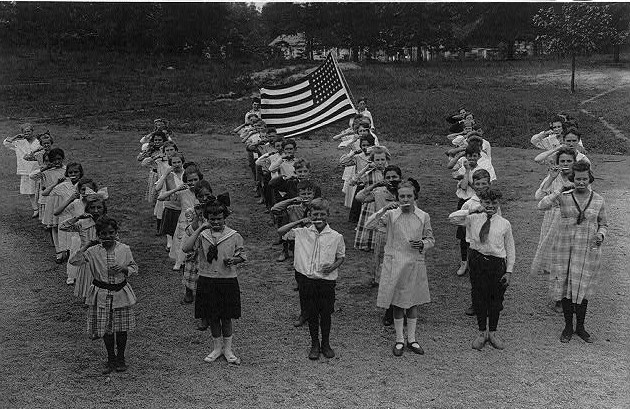
platoon tooth brushing

It is never too soon to learn your patriotic duty as an American to stand firm against the spittle hordes.

After about 15 seconds of a full-fledged Irish jig, the strand usually snaps off. By then, the kid is breathless and exhausted, but his mouth is safe to bring his toothbrush near again. That is, unless the strand has the unholy gumption to snap in the middle. Then the terror begins all over again. Only it’s worse now, because it’s going to take longer for this shorter pendulum of swinging spittle to build up enough momentum to break free of him.

He should have continued to leave out simple verbs and just gone and adopted a big boy to do these dangerous tasks for him. It would have been easier that way.

Gentlemen is just a fancy word for girls

My son seems to be testing the hypothesis that he can more easily get what he wants if he expresses his desires in terms that might be used by a 50-year-old diplomat. Unfortunately, four-year-olds don’t always understand the meanings of the words necessary to overwhelm their parents with polite graciousness.

We were playing at the train table in the back room. I had the baby as well. This meant that we could choose to have all of our creations destroyed almost immediately by the continuous tornado of infancy, or we could subject ourselves to constant crying as I held the baby back from his sworn duty to deconstruct any system giving off the odor of intentional design.

I was in favor of letting the whirlwind run amok. Big Brother voted for incessant wailing. Neither choice was a good one, but the final decision was mine. The boy, weighing the balance of power within the room, turned to diplomacy. “I’ve got a great idea,” he said. “Let’s leave the baby with those gentlemen.” He pointed, in his open-handed way, through the kitchen toward the living room.

Hearing my son refer to any people as gentlemen left me befuddled and amused. There were indeed two people in the living room, and for a second I imagined that they were the foreign ministers of Germany and France. In fact, they were my wife and her sister. I was about to tell him, “That’s no gentleman; that’s my wife,” but I realized it wouldn’t be funny to him, or to anyone else.

Instead, I asked, “Do you know what gentlemen means?”

“Yeah, it means girls.”

Women's League

Maybe these gentlemen can watch the baby. That is, if they are all done pushing Germany and France toward war.

“Listen,” I commanded, as I began to speak slowly. “Gentlemen, gentle . . . men, men. It means boys.”

A true diplomat must have the ability to adapt to a changing situation. He must have the skill to address a new reality without any embarrassment or regret over what no longer obtains.

Before I could even get around to asking him if he understood, my son’s arm was raised again, his open palm indicating the path to the living room. “I’ve got a great idea. Let’s leave the baby with those gentle ladies,” he said.

I’m signing him up to take the Foreign Service Exam. I just hope it doesn’t have a vocabulary section.


Scorn is fundamental

Our four-year-old is learning how to read. He is also learning how to not read. Take him to the toy department of a store and he can read surprisingly well. The words on the boxes all spring to life with vast meaning. Sit him down with a book at home and letters no longer make pronounceable sounds; words are cryptic hieroglyphs on the page.

At first blush his selective comprehension might seem like laziness. And it probably is, to some degree. But it also represents an understanding of the economic value of knowledge. When there is something he wants, he suddenly has knowledge to offer. When knowing offers nothing but tedium, he naturally knows nothing.

His strategy of using reading as currency is obvious. The other day, he quickly read the word Batman on the cable guide because he likes that show. He has become quite a fan of the old 1960s TV version (and for anyone who thinks Adam West is not a great actor, you try to say some of the lines he had to say with a straight face).

Another time, the boy also easily read the sentence, “Do you want chips and cheese?” when his mother wrote a note for him. He really wanted chips and cheese, which momentarily made him a super-reader. With a full belly, he became illiterate once more.

He has yet to embrace the concept of delayed gratification: make your parents happy and proud now, and you are more likely to receive some as-yet-unnamed reward in the future. Consequently, we are left with the task of trying to make reading, for its own sake, seem less toilsome.

We have a collection of magnetic letters stuck to our refrigerator. He uses these to spell out words. His baby brother likes to play with the letters too, but his favorite game is to push them underneath the fridge.

One day, the big boy was using the magnetic letters to spell out his full name. He was lacking a letter, so we spent our time trying to retrieve some of them from underneath the appliance. We finally found the letter he needed, but there were still more letters underneath that we couldn’t reach. He wanted all the letters back.

He had seen me push the fridge away from the wall once before so he grabbed hold and tried to push that monster out of the way. Of course, it didn’t budge. “Help me move this,” he insisted of me.

I had nearly destroyed its wall plug the last time I’d moved it. “No. I’m not moving the fridge again,” I told him.

He put his hands on his hips and gave me a look of disgust. “I thought you were trying to be helpful,” he growled.

The jury is still out on reading, and delayed gratification is yet to come, but it appears as though I’ve done a bang-up job of teaching him scorn.

Reading is fun!

I really need to pull another N out from under this fridge before the boy hits middle school and this message takes a wrong turn.