Please, please, please, don’t abuse the magic word

“Can I sit in the front seat?”

“No.”

“Can I drive?”

“No.”

Please.”

“No.”

“I said a good word.”

“Yes, you did, and that was very nice of you. I appreciate it. But three-year-olds aren’t allowed to sit in the front seat or drive the car.”

Please is indeed a good word. It is a very polite and useful word. Also, I don’t blame the boy for dreaming big. If he’s going to ask to sit in the front seat, he might as well request to take the wheel.

Well, he did say please.

We all want our kids to learn to use nice words like please and thank you. We want them to know when and how to say excuse me and I’m sorry. Speaking of dreaming big, I have pipe dreams about my son learning to say sentences along these lines: “Daddy, I am truly humbled by the sacrifices you and Mommy have made in the name of my happiness.” (This one might be a long shot.)

Of all the words and phrases we want our kids to learn the habit of using, please is the trickiest. Please is a trap. It baits us into presenting it as the universal door-opener. How often do we hear an adult ask a child for the magic word? I’m sure I’ve made that mistake myself and I regret it.

Please is not a magic word. It is nice word, but it holds no more power than any of the other nice words. It only works when used by a reasonable person, making a reasonable request upon another reasonable person. Please won’t get a little boy into the front seat of the car. It won’t get him behind the wheel. It won’t get him cupcakes for dinner, and it won’t allow him to live in my house until he’s 40. None of these are reasonable requests, and there really are no magic words to make them so.
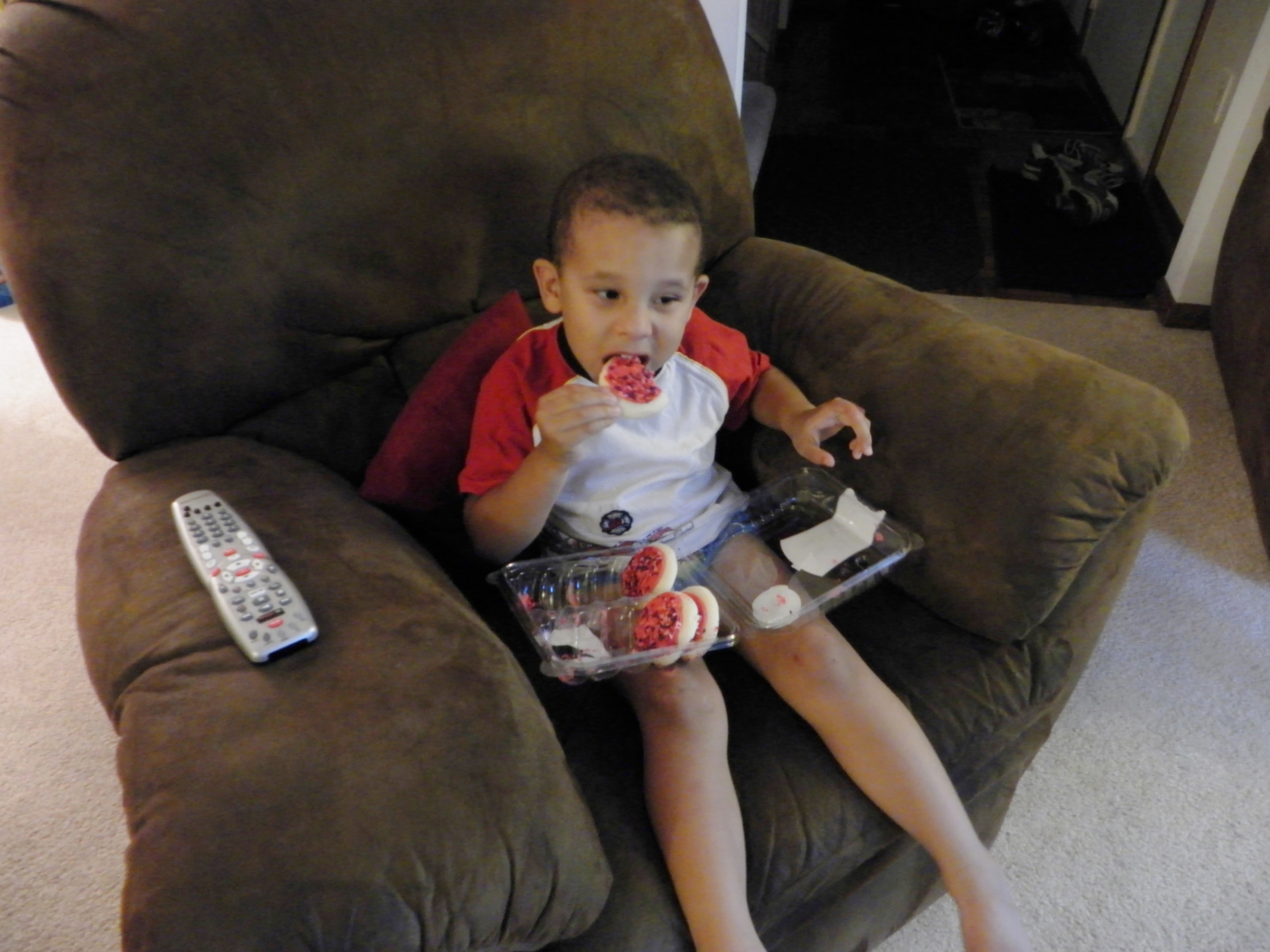
I don’t know how he got hold of a whole package of cookies. All I can figure is that he must have said pretty please.

My son doesn’t recognize please as a magic word when his parents use it. It is little more than the waste of a syllable when we use it on him in requests like these:

  • “Please eat your dinner.”
  • “Please don’t poke your baby brother to see if he’s asleep.”
  • “Please stop asking if you can drive the car.”

If there is a silver lining in his declining our polite requests it is that maybe he really can understand that getting the things you want in life takes a little more patience and effort than throwing around some magic word. Getting him to finish his dinner certainly does.

I’m trying hard to get away from please as a magic word. Magic is fun, and there is a place for it in a child’s world, but it is no substitute for respect, character, or kindness. To anyone who will show my kids examples of these traits, I say please and thank you.
Put your head on my shoulder, dammit!

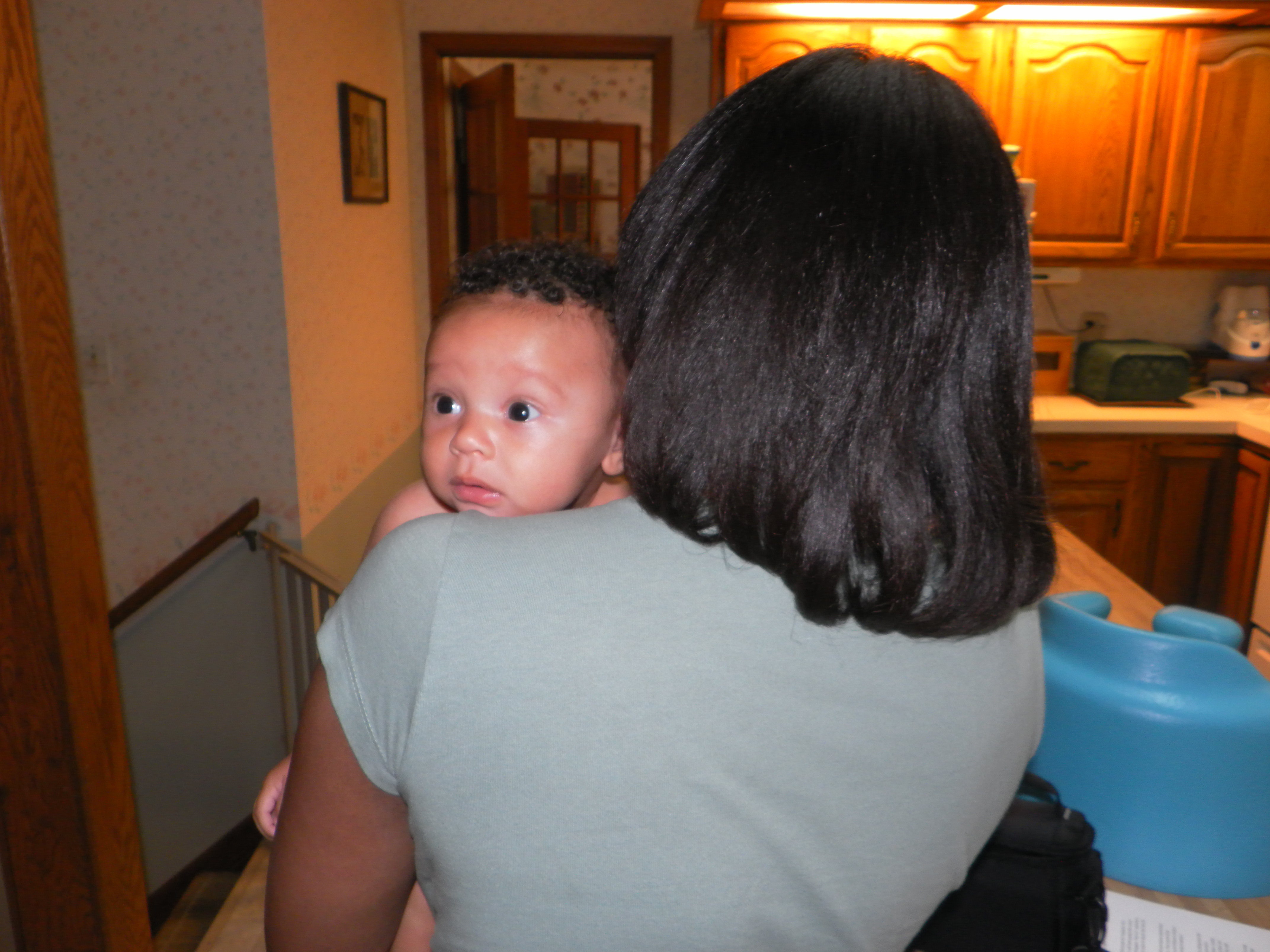
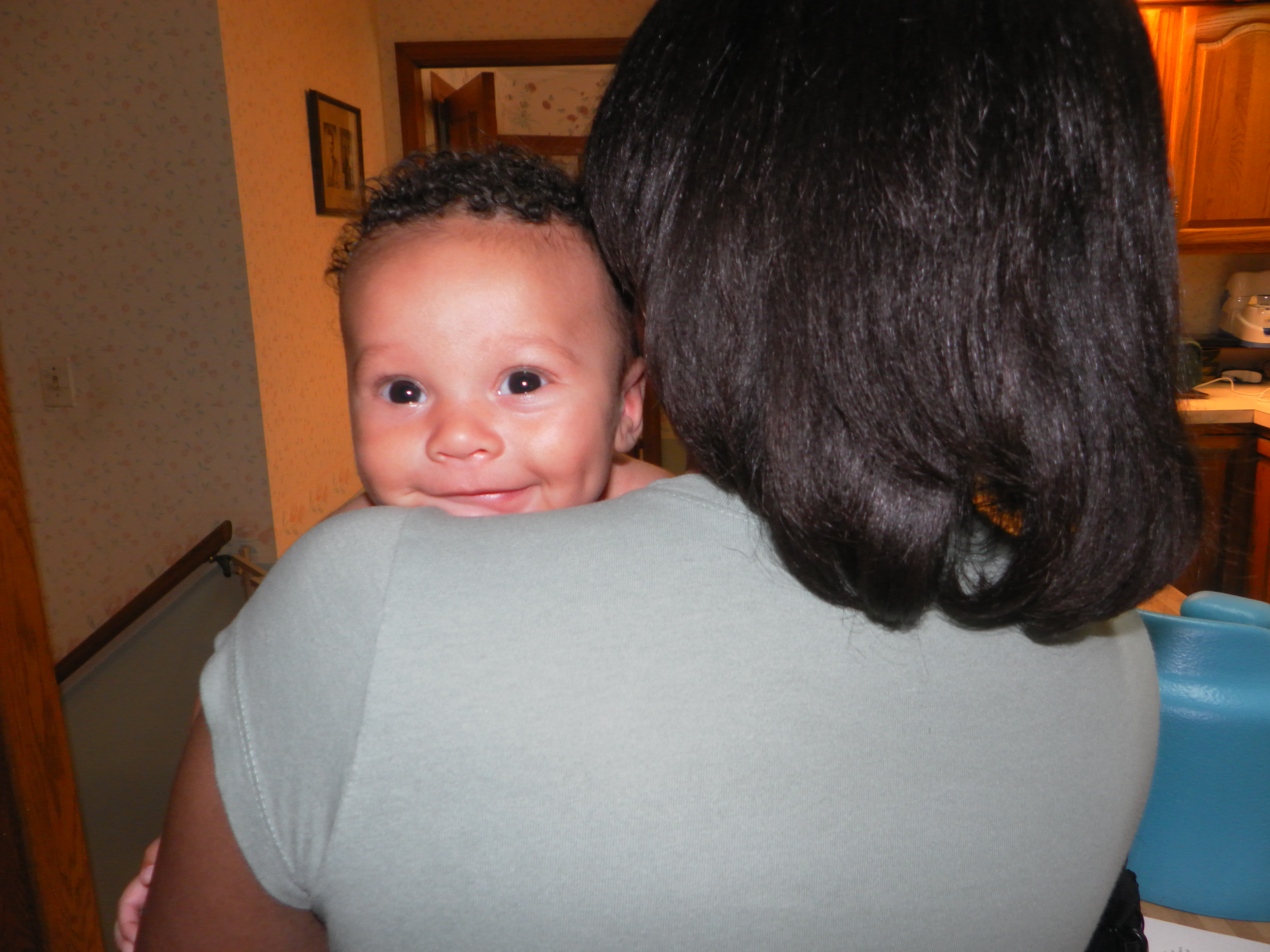
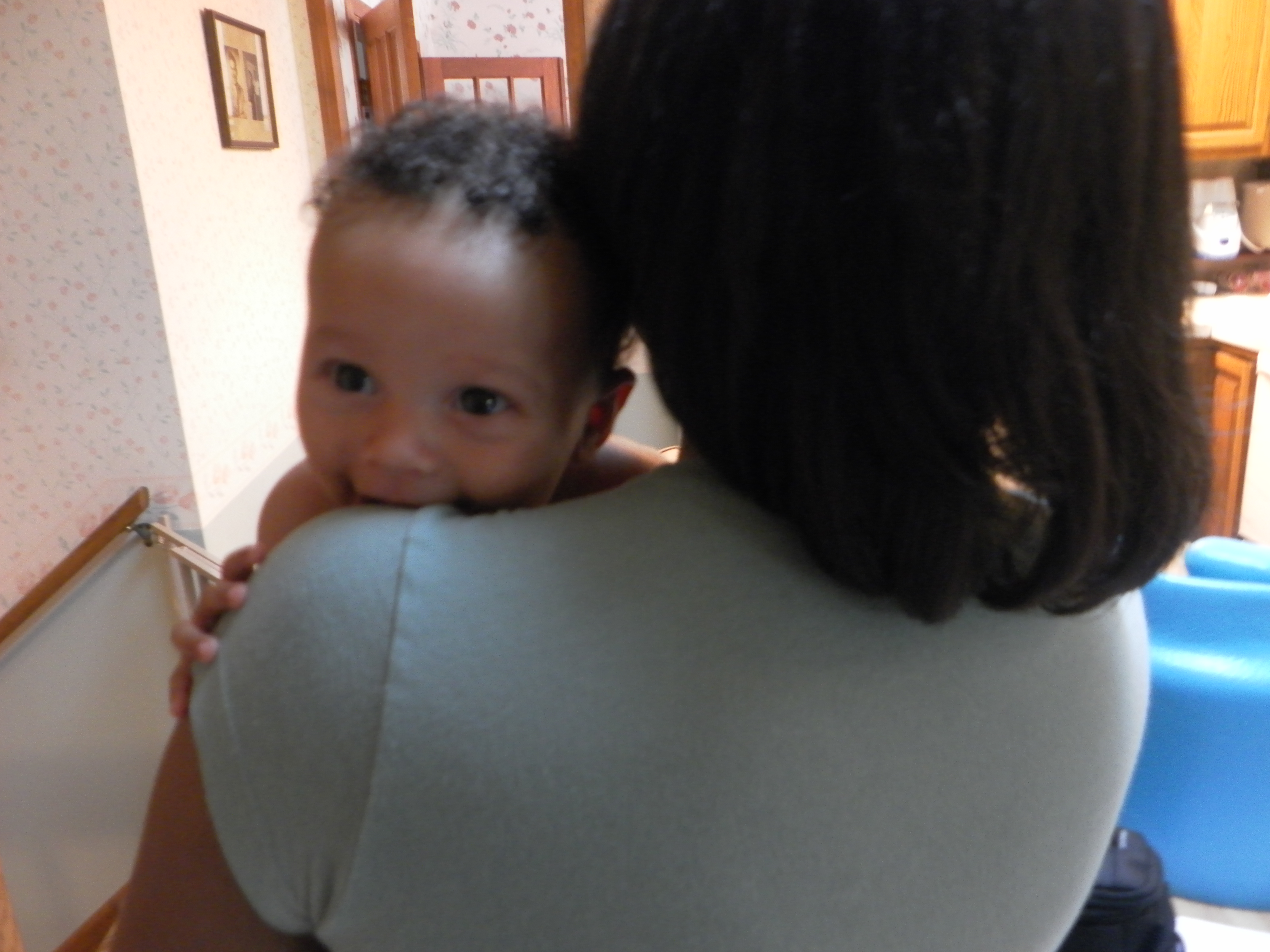
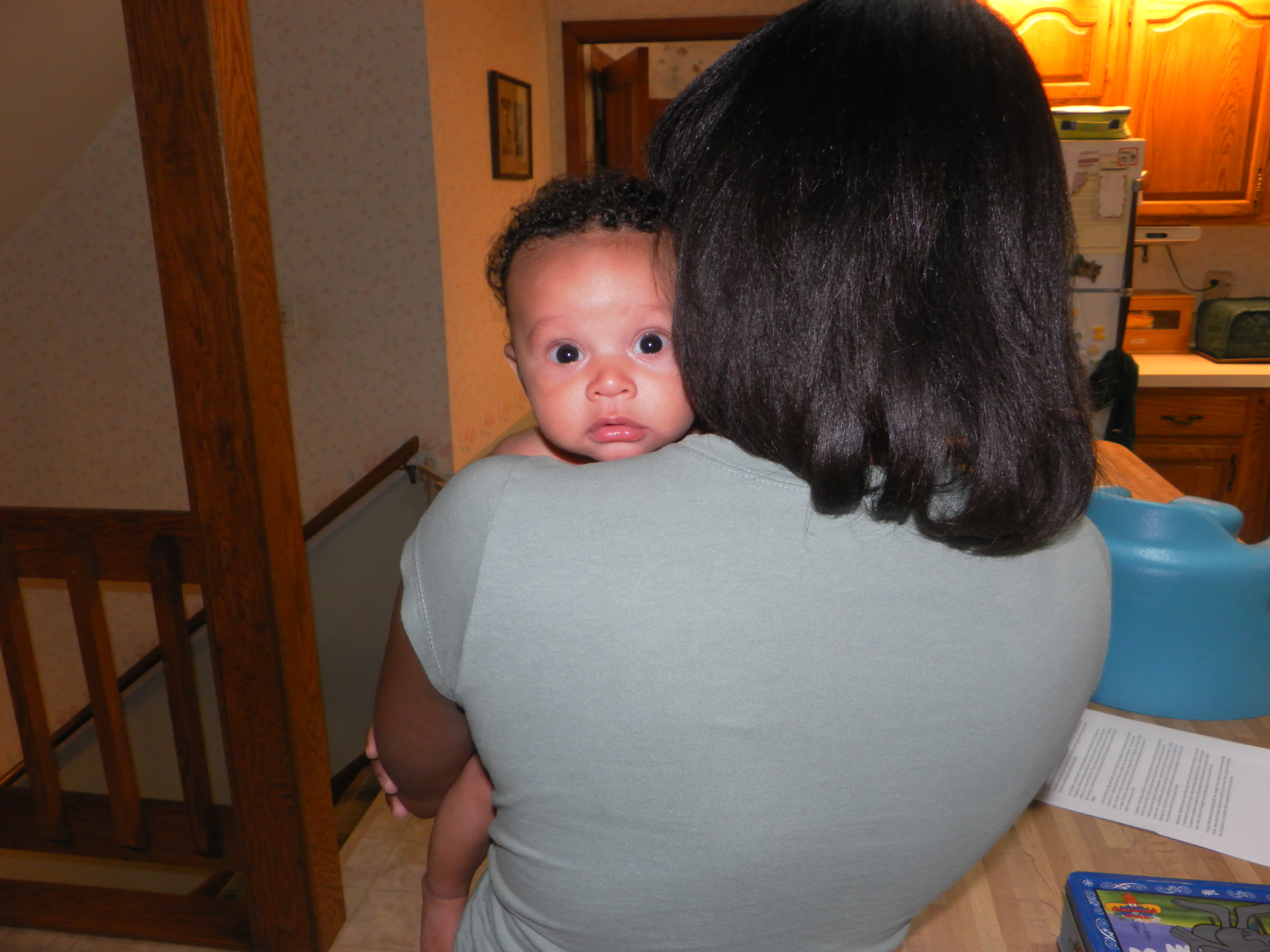
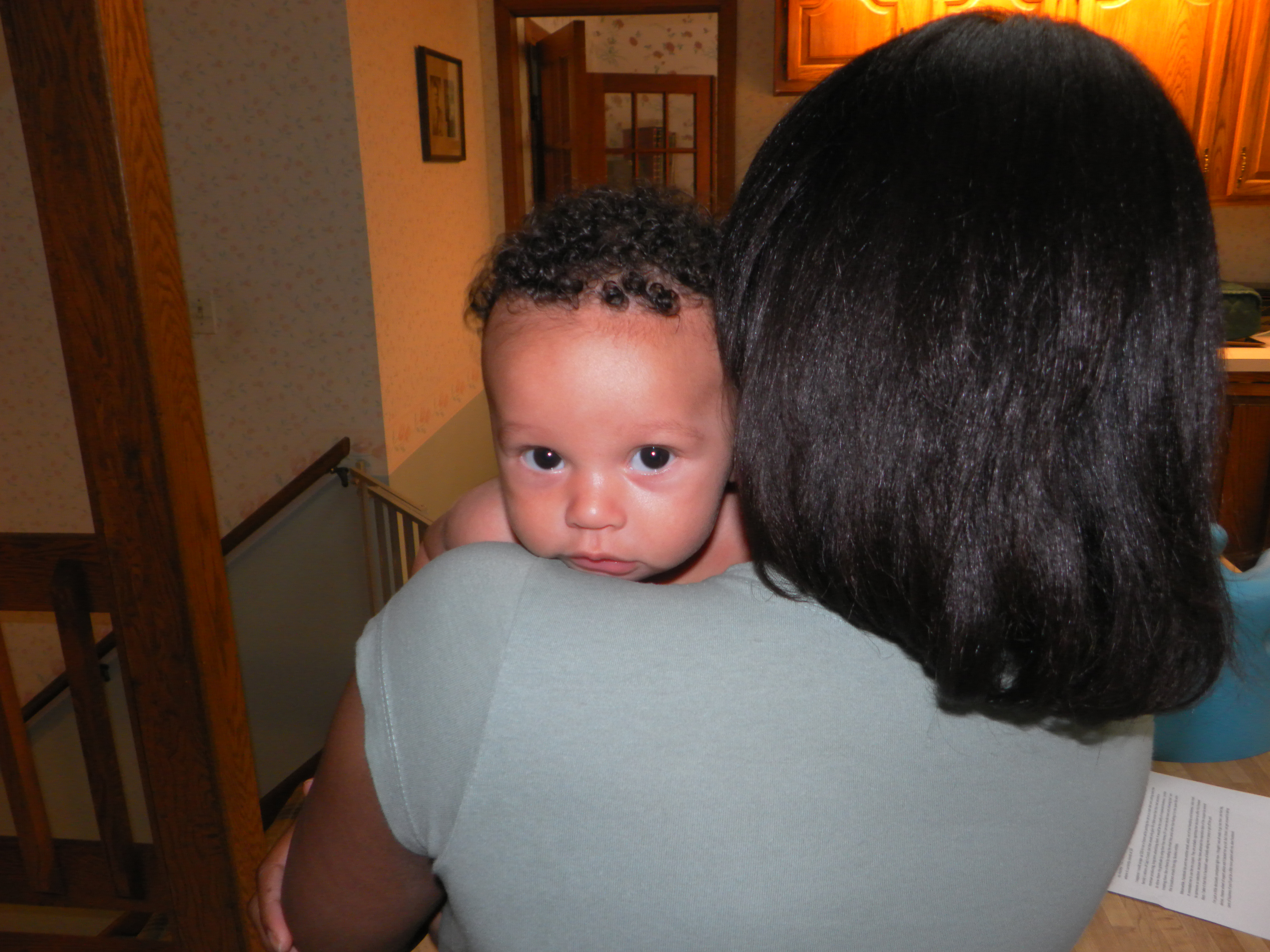
Is it unmanly to admit that I’m a touch jealous of the way the baby snuggles up so happily on Mommy’s chest and rests his contented little head on her shoulder? Luckily, I have some wood to split out back, so if an admission like this siphons some of my manliness, I’ll just pick up my splitting maul and go pump it back up to the fill line.

The baby settles in so easily when Mommy holds him close. He looks like he fits the spot perfectly and would rather be nowhere else. Whenever I try to rest his little noggin on my shoulder, he swipes his face from side to side, unable to find a comfy spot for it. He never settles down and eventually becomes so disgusted with the arrangement that he tries to thrust himself off of me like a backstroke swimmer at the start of a race.

The baby seems to have some difficulty with my clavicle. As he fidgets around my shoulder area, you can tell he is wondering to himself, “What’s this raggedy bone doing here? It’s all in my face no matter how I squirm. I can’t rest here. I’m gonna backstroke my way right out of this mess.” Then he kicks off.

“Oh no! Here comes Daddy. I hope he isn’t thinking about trying to hold me on his chest.”

I’ve never considered myself to be the bearer of an overly prominent collar bone. My clavicle seems to protrude no more profoundly than my wife’s does. So why is the baby not bothered by hers? Do mothers have a retractable clavicle that hops out of the way when Baby is near?

“Get those broken glass shoulders of yours away from here, Daddy. I mean it!”

Or maybe my torso is too long. Maybe I need to heft him up higher so he can hook his chin over my collar bone. I wish we had kept the instruction manual so I could look at the diagram and see how to align Chin-A with Clavicle-B. I try to lift him up high so he can find a good spot, but he always acts like my shoulder is as cozy as a pile of rocks.

“Help, Mommy! Don’t let him scrape me on those pricker bushes he’s got growing out of the sides of his neck!”

When he’s snuggled in good on Mommy’s shoulder, his button nose burrowed into her neck, he spreads his contented gaze over the whole world. His baby eyes say to me, “Mommy is so warm and soft,” without needing to finish the comparison they are implying.

At times like this, I am tempted to point my bony finger into his face and say, “Listen you! I know Mommy is warm is soft. I knew that before you were even born. And if I hadn’t discovered how warm and soft Mommy is, you wouldn’t be here. Lucky for you, Mommy doesn’t get all bent out of shape just because I happen to have a clavicle. So put that in your pipe and smoke it!”

“Phew! He’s just taking pictures. Sure, I’ll smile. Keep that bed of nails away from me and I’ll smile all night long.”

I don’t actually say these things. How could I when he is so damned adorable, nestled on Mommy’s shoulder? I could never raise my voice to his happy little face, even telepathically. Besides, is it his fault that I have a mondo-monstrous clavicle that starts arguments by poking innocent bystanders in the eye?

“You’ve got the best shoulders in the world, Mommy. Good enough to eat. You just keep snapping the pictures, Pops.”

Don’t look a gift dad in the mouth

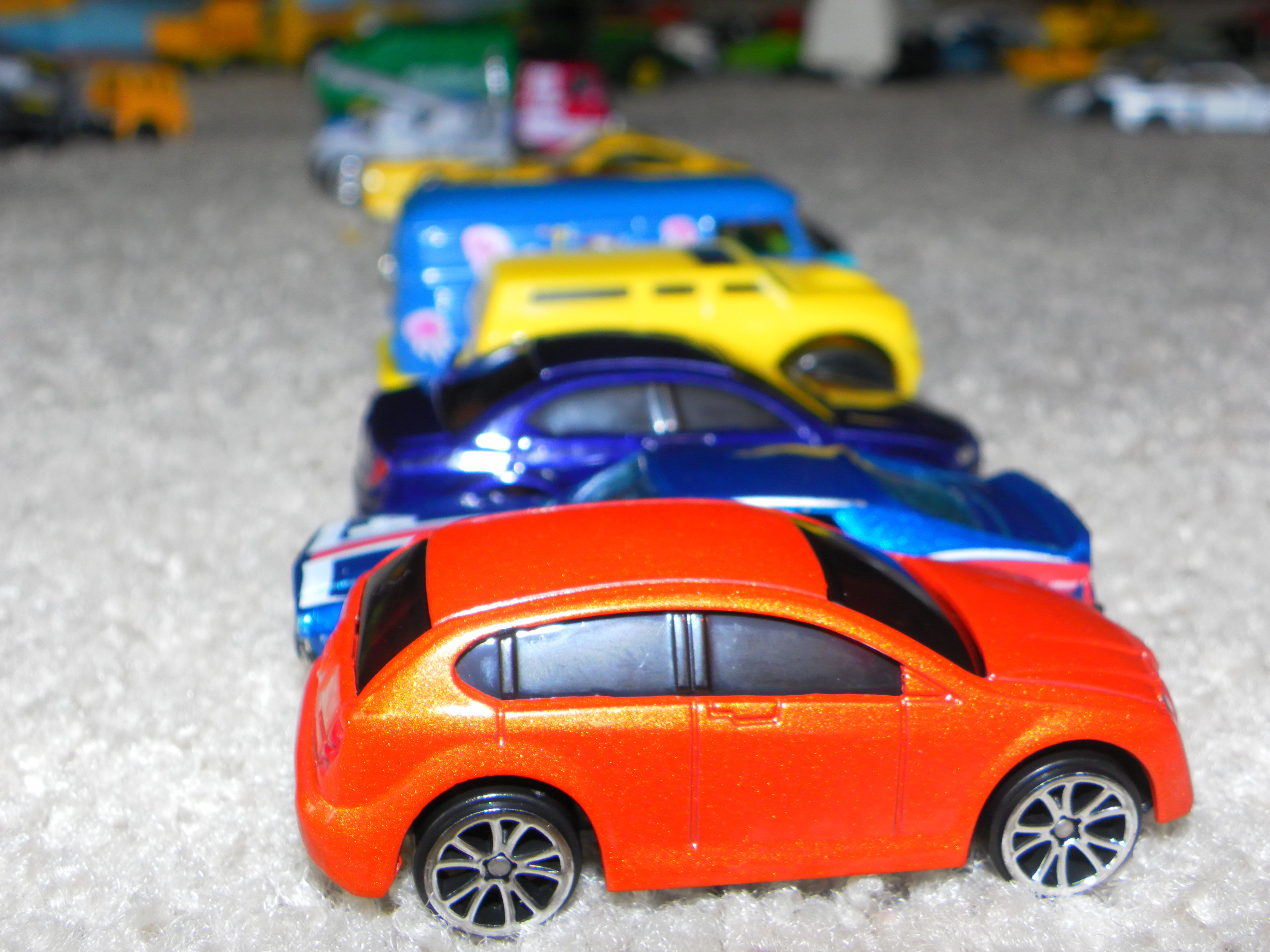
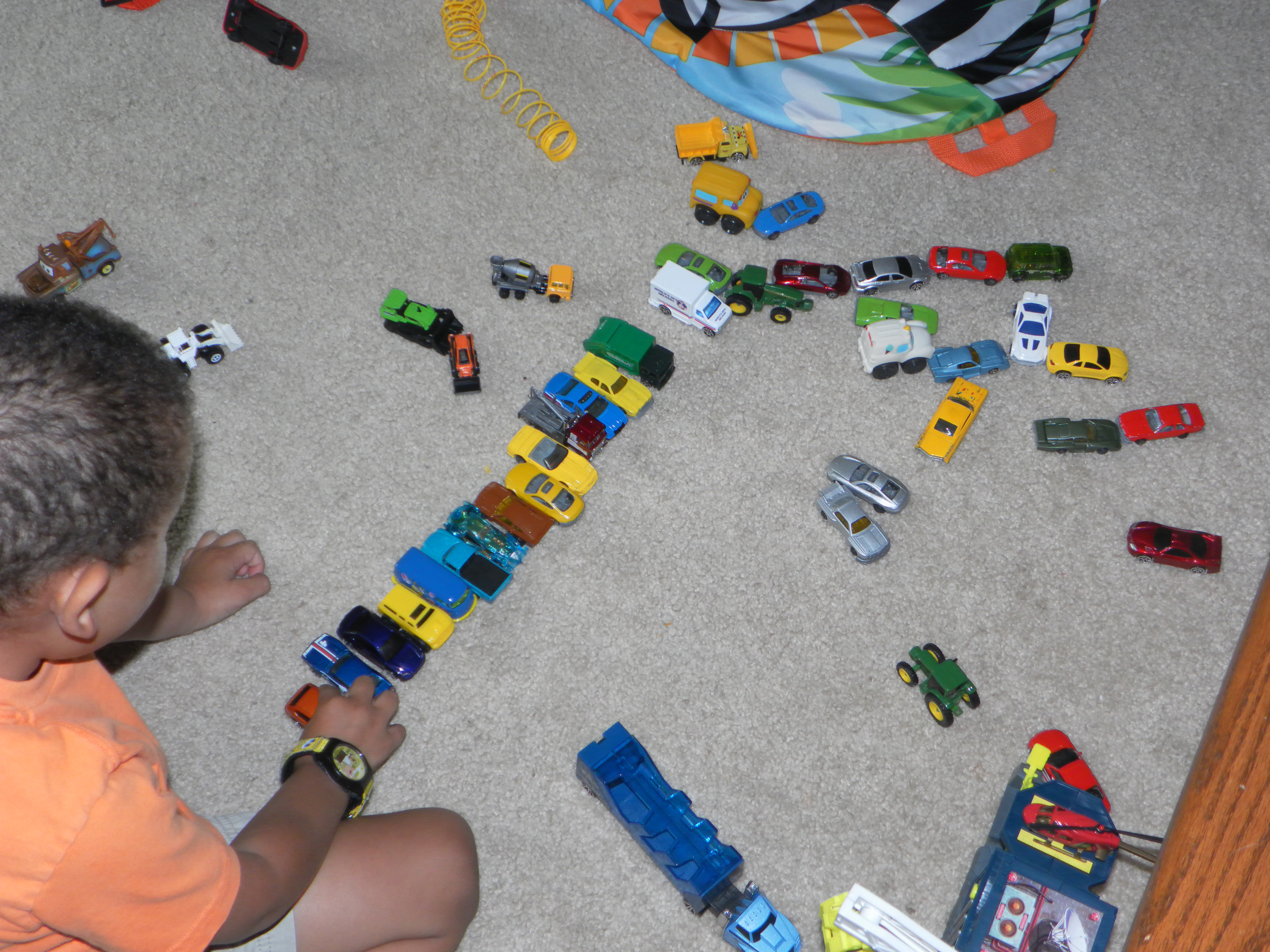
My son has quite a little collection of Matchbox cars. He likes to line up all his cars in the manner of a miniature used car lot. It’s a way to organize his ever-expanding empire and make its growth quantifiable.

The miniature car lot: Bad credit? No problem! Just go work your charm on Mommy or Daddy.

One day, while he was lining up his cars, a burst of generosity overcame him. “Here, Daddy,” he said. “I have a surprise for you.” He held out his hand in the way a child does when offering an imaginary gift.

I took his pretend present eagerly. I was happy that his head was not so turned by the success of his car dealership that he had forgotten his poor old dad.

“It’s a transformer,” he told me as he handed the gift to me.

“Oh good,” I said. “I love transformers.” I made some turning motions with my hands and some transformative sounds through my teeth. “Schwitt, schwitt, schwitt,” I said as I twisted the air between my fingers. “It’s a truck. Schwitt, schwitt, schwitt. Now, it’s a robot with a laser canon.”

The boy laughed. He was pleased with how well I understood the workings of his gift to me. “Do you have a surprise for me?” he asked.

“Oh yes, I certainly do,” I replied. I could give the kid these kinds of toys all day long. They are imaginative and economical, and that is just the sort of world I need to live in, even if it is make-believe and only lasts until our next trip to Target.

I quickly put my empty hand behind my back and pulled it out again, offering him all the treasure it held. He took the wonder from my hand. “What is it?” he asked.

“It’s an airplane,” I said, happy that I could give him something so nice.

All good things must end. What caused our precious moment to end is hard to know. The best I can guess is that a surge of petulant testosterone spiked up his spine to that reptilian spot in the brainstem of all little boys. Who can say for sure what it is that transforms the pleasant Master Jekyll into that nasty Hyde urchin in the blink of an eye.

He flung my gift away. “I hate airplanes,” he huffed. His cerebrum does not hate airplanes in the least, but a spastic, testosterone-drenched medulla oblongata is liable to hate anything and everything.

“Oh,” I said. “If that’s what you do with my presents, I guess you don’t need to get any more from me.” I looked meaningfully at his array of die-cast cars.

He followed my eyes to his cars. I could almost see self-interest tamping down the testosterone at the top of his neck. “Wait,” he said. “Can we do that again? Here’s another surprise for you.” He held out his hand. “It’s another transformer.”

“That’s so nice,” I said. “I love it.” I drew out the word love as I gazed my meaning into his eyes. “And here’s another surprise for you.”

He took his present out of my hand. “What is it?”

“It’s another airplane.”

He stared at his hands for a moment, too proud to love his imaginary present and too wise hate it. “Let’s play with my cars,” he said after he had given the problem in his hands just enough time to evaporate.

Somewhere between pride and humility there lies a sanctuary of comforting die-cast vehicles. Diplomacy is a complicated playroom.

Let’s all go for a ride in the clown car

I bought my car 14 years ago — five years before I began dating my wife and 10 years before we had our first child. I was a single guy who lived in a one-bedroom apartment and watched TV on a 19” box.

My little car has two doors, crank windows, and no A/C. Also, it has a manual transmission, which occupies my kid-swatting hand much of the time I am driving. I chose my car because it promised reliable, low-cost transportation for myself, and possibly a date. Those were the only souls I could imagine transporting.

In recent years, it would have been reasonable to trade in my car for something more family friendly.  As sensible as this act would have been, there are a few reasons why I have not done it.

  • Cars cost more now than they did in 1998. I now have a wife and children. By definition, this means that I have less money than I had in 1998. The gap between myself and a new vehicle only seems to be widening.
  • I love my car. It still gets great gas mileage and has been cheap to keep in good running order. Besides, she’s never whispered a peep about where I went, and with whom, during those five years before my wife came along.
  • My wife’s car, though not perfect, has been adequate as a vehicle for transporting the children. It transports them far more often than my car does.

Sleek, inexpensive, and good at keeping secrets. What more could a man want?

Still, there are times when I need to transport the kids in my car. The first time I tried this, it was quite an eye-opener. We were in a hurry, and since my older son’s car seat was already in the middle of the back seat, I put the baby’s car seat in the most easily accessible spot: behind the driver’s seat.

I couldn’t put the driver’s seat back upright without sliding it all the way forward. I’m not short enough to drive comfortably with the seat all the way forward. It made it kind of difficult to let the clutch all the way out without rolling my ankle to the point of a sprain. My elbows extended perpendicularly from my body whenever I put my hands on the wheel. I had to roll down my window to make enough room to get my left hand on the wheel.

It was a short trip, so I decided to bite the bullet and drive all folded up this one time. I didn’t reckon with a difficult parking situation at my destination. Searching out a parking spot in a crowded area is a very active, albeit slow, piece of driving. As I was resting my chin on my knee, contemplating where best to park, this became painfully clear to me.

In 1922, bachelor Rocco thought only of cutting a dashing figure in his zippy sports car.

An indeterminate number of children later, Rocco reluctantly traded in his sports car for this early minivan. This transaction began the period commonly known as the Great Depression. (Image: Russell Lee – U.S. Farm Security Administration)

Fortunately, the throbbing of my clutch ankle was superseded by a cramp, closer to the spine, in the calf of that same leg. The three-year-old asked from the back seat why the ride was so jerky today. I told him to save his questions until he had identified a viable parking spot.

As I was losing feeling in my lower body, I broke down and decided to pay to park in a ramp. It was a bitter decision, taken for the sake of the children. It meant that I would have to carry the baby a bit farther to our destination, but as I limped away from the vehicle, I decided it was a small price to pay to allow the imprint of the steering wheel to start to fade from my chest.