The urinal whisperer

In a three-year-old’s world there are a lot of things that can distract from the need to take action when the urge to potty strikes. At home, my son sometimes gets so involved in his play that he needs to be reminded that nature won’t just leave him alone because he can’t find a spare moment to heed its call.
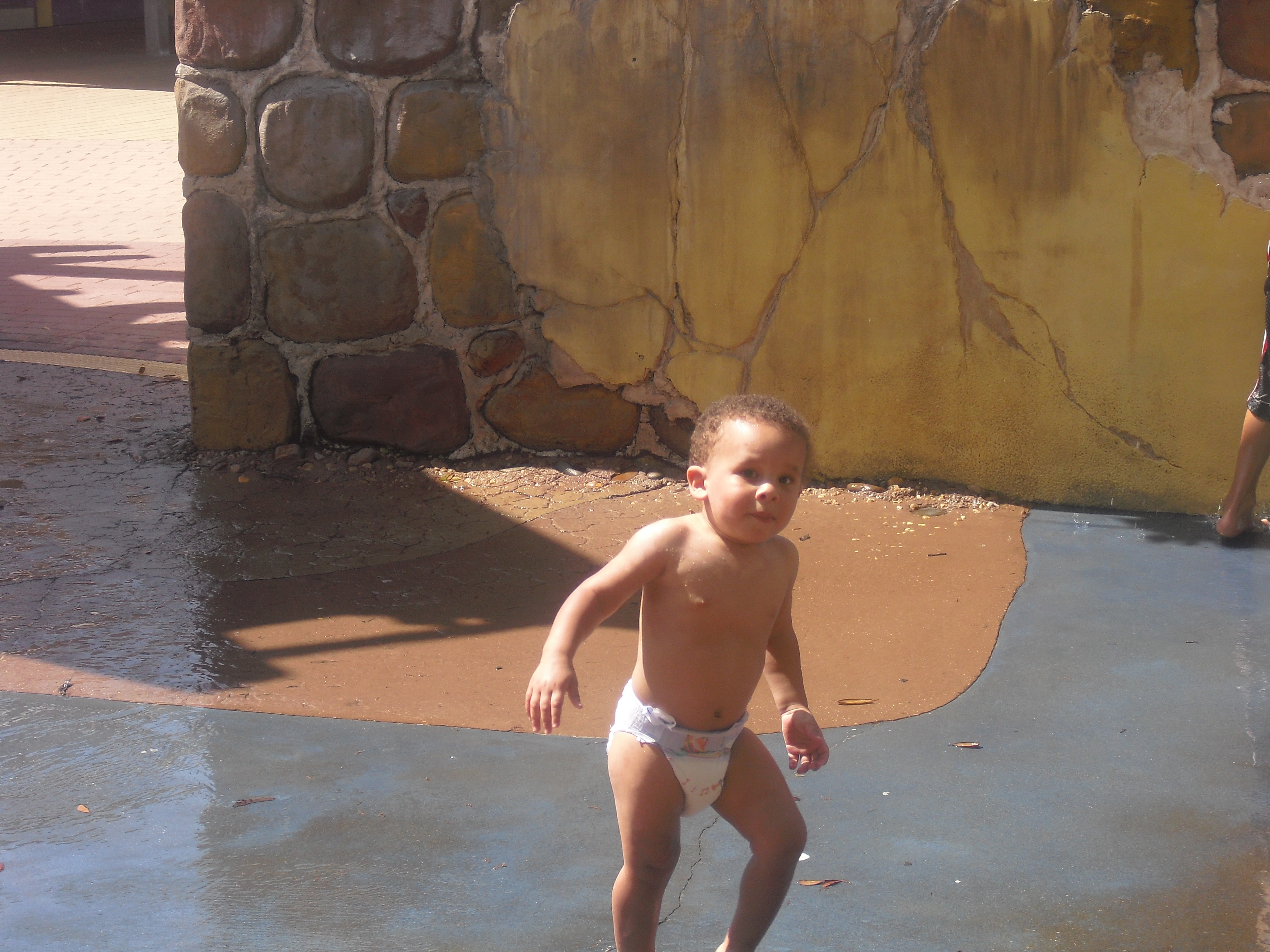
Way back in his caveman days, he didn’t need to worry about taking time out of his busy wild man schedule for potty breaks. Now that he is civilized, having traded the diaper for underwear, life is more complicated.

Accidents at home are one thing, but accidents that happen when the family is out are doubly inconvenient. We quickly learned the habit of making the little man empty his bladder before we head out of the house. We continue to do this as a precaution, though I’m not sure it’s necessary anymore.

It is not necessary because our little guy has developed a most disturbing hobby. He loves to patronize public restrooms. He did not inherit this trait from me.

The boy is fascinated with urinals. While I agree, urinals are amazing pieces of technology, allowing men to get in and get out of the restroom faster than ever in recorded history, my appreciation for them falls far short of fascination.

Some people like to go around to different cafes, making mental notes of which ones have the best lattes or creamiest cheesecakes. Like these folks, my boy is also an amateur critic. He specializes in comparing our community’s urinals.
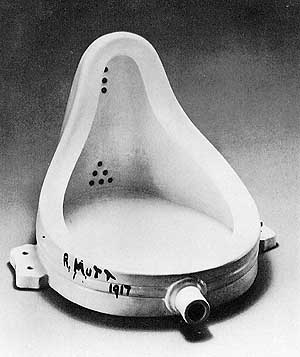
In 1917, Marcel Duchamp entered this urinal into an art exhibition. If he had been there, my son would have voted it a blue ribbon. Then he would have put it to the test as functional art.

The first criterion that sets a particular urinal apart from the competition is height. He bursts into the restroom scouting out a “little one.”  I’m always relieved when he finds one, because I’m never comfortable with his accuracy when he has to aim high.

Another exciting feature is the self-flushing urinal. I appreciate this advancement also, as I don’t like for him to have to touch anything not absolutely necessary in the public restroom. Whereas flushing occurs to him to be optional at home, he insists on being a good citizen and flushing even the most repulsive receptacles in the public arena.

While I try to be patient with the boy’s desire to chart all the public restrooms in town, it really drives me up the wall in restaurants. He usually waits until our food comes before announcing that he has to go. In the olden days he could go with Mommy sometimes, but now he’s getting big for that, and he’s also noted a disturbing lack of urinals in the bathrooms Mommy frequents.

If you asked my son to read this sign, he would tell you it says, “There are only boring toilets in here. Go to the other bathroom.” Image via Wikipedia

Instead of eating our food before it gets cold, we are off to the men’s room. Hopefully, there is no novelty in this one to catch hold of his imagination and derail him from focusing on the task at hand. Regardless, there are a lot of steps to a successful toddler trip to the bathroom. These steps take time.

Time-consuming procedures are bad enough in a clean, comfortable bathroom, which some restaurant bathrooms are certainly not. I hover around him, making every effort to slap his hands away from anything that is not soap or water. Even so, I usually emerge with a waning appetite. The cold food that is now waiting for me doesn’t do much to help.

It may be that urinals are something that are helping the boy establish his gender identity. I’m no psychologist, so they may just be something that allow the kid to pee at a wall. That’s a good reason to like them too, I suppose. Either way, I can’t wait until he can hold it until after dinner.
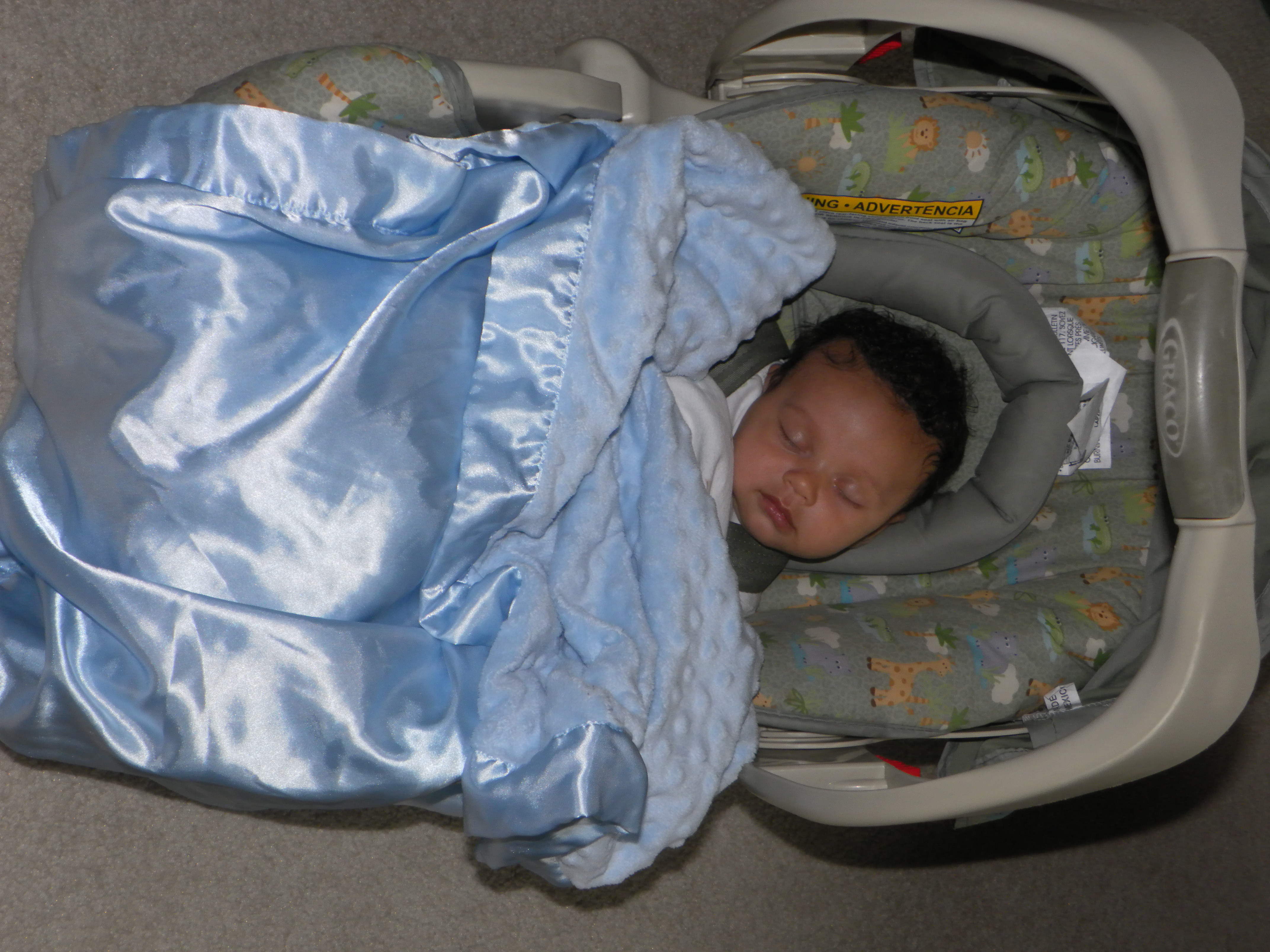
It’s my party and I’ll nap where I want to

There is an art form to putting a sleeping baby into his cradle without waking him up. Unfortunately, it is an impressionist art form, so it is hard to see it the same way twice. Not only is it different for every baby, it is different for a single baby each time you try to put him down.

In many ways, art exists solely in the mind of the beholder, and so does the belief that you have any say over whether Baby keeps sleeping. This is not within your sphere of control – unless you dropped the baby head-first into the cradle – then it might have been under your control, and chances are you blew it. But if you are relatively gentle in depositing the baby into his bed, you’ve done all you can do. The baby will decide your success, and he will do it on a whim.

There are two places where our babies have preferred to fall asleep: in the car seat and in our arms. There is one general category of places where they preferred not to sleep; that category includes any cradle, crib, or other bed specifically designated as the baby’s sleeping area.

Getting a well-deserved nap and driving Mommy and Daddy crazy with the old rubber neck. You can’t get nearly that much accomplished in a bed.

Removing the baby from the car seat involves some unharnessing. Unharnessing is the type of act that is meant to wake up sleeping creatures. I believe unharnessing was invented for no other reason than to annoy people out of peaceful slumber.

What makes it worse is that we have a pacifier clipped to the harness. I can’t tell how many times I thought I’d liberated the baby from his car seat fetters, only to be thwarted by the pacifier strap wrapped around his wrist. The first indication of this little snag is the car seat hovering off the ground when I lift the baby. The second indication is the baby screaming at me for waking him so rudely.

It’s hard to resist rocking the baby to sleep in my arms. It is a nice moment, until it becomes a long afternoon. I adore the child, but I really can’t be without the use of my arms for hours on end. At some point, we need to find a new arrangement.

Getting up from a rocking chair with a sleeping baby is a singular feat of agility. It’s kind of like a limbo dance that culminates in a vault as you slide yourself to the edge of the seat before hurling your torso forward as you try to stick the landing. It’s something to be proud of for sure, if you are the type to take pride in tasks half done.

You’ve still got to get the baby away from your warm, snuggly body and lower him into his bed. Here are a few popular strategies to accomplish that.

  • The Spine Snap: you try to double yourself up and lower your chest right down into the cradle with him.
  • The Forklift: you separate the child from your body first and then lower him with only your hands.
  • The Roll the Dice: you put the baby down in one swift motion and let the chips fall where they may.

The forklift. Notice that the baby’s eyes are open. This attempt failed as soon as it began. I’d like to have shown a successful cradle landing, but the odds of capturing such an event are infinitesimal.

Try whatever method you like; they are all destined to fail. Once in a blue moon, you might be tricked into believing you were successful. This is the rare occasion when the baby would rather sleep than mock Daddy’s feeble efforts. It almost never happens.

Ginger and his brother, Mary Ann: a nicknaming debacle

Sometimes I wonder why people go to the trouble of naming babies. After all those hours of pouring over the baby names books, after all those alarmed faces you had to make, listening to the ridiculous names your spouse suggested, after all those recollections of the goofy children of your youth who put otherwise respectable names off-limits with their oafish behavior, you finally settle on a name that everybody can live with. And then you call the baby something else anyway.

Children should not be formally named until they are two or three, when they have outgrown all the infant, pet names their parents have invented for them. If all little boys were named at age two, none of them would have names that mean peace is some distant language. There would be a lot more truth in advertising.

Before the new baby was born, our son wanted to name him Brother or Doritos, depending upon whether he was more in the mood for a sibling or a snack. Both of these names made sense in their own way, and I was happy that he chose them instead of names like Parasite or Usurper. At the very least, I knew Doritos were something he liked.

Meanwhile, my wife and I spent countless hours negotiating. None of our top picks could win the support of the other parent. Finally, hours after the baby was born, we found a compromise.

Now, weeks later, I have observed that my wife refers to the baby most often as Tiny Tim. His name is not Tim, nor is it Tiny. Sometimes she calls him Peanut. This is also not his name.

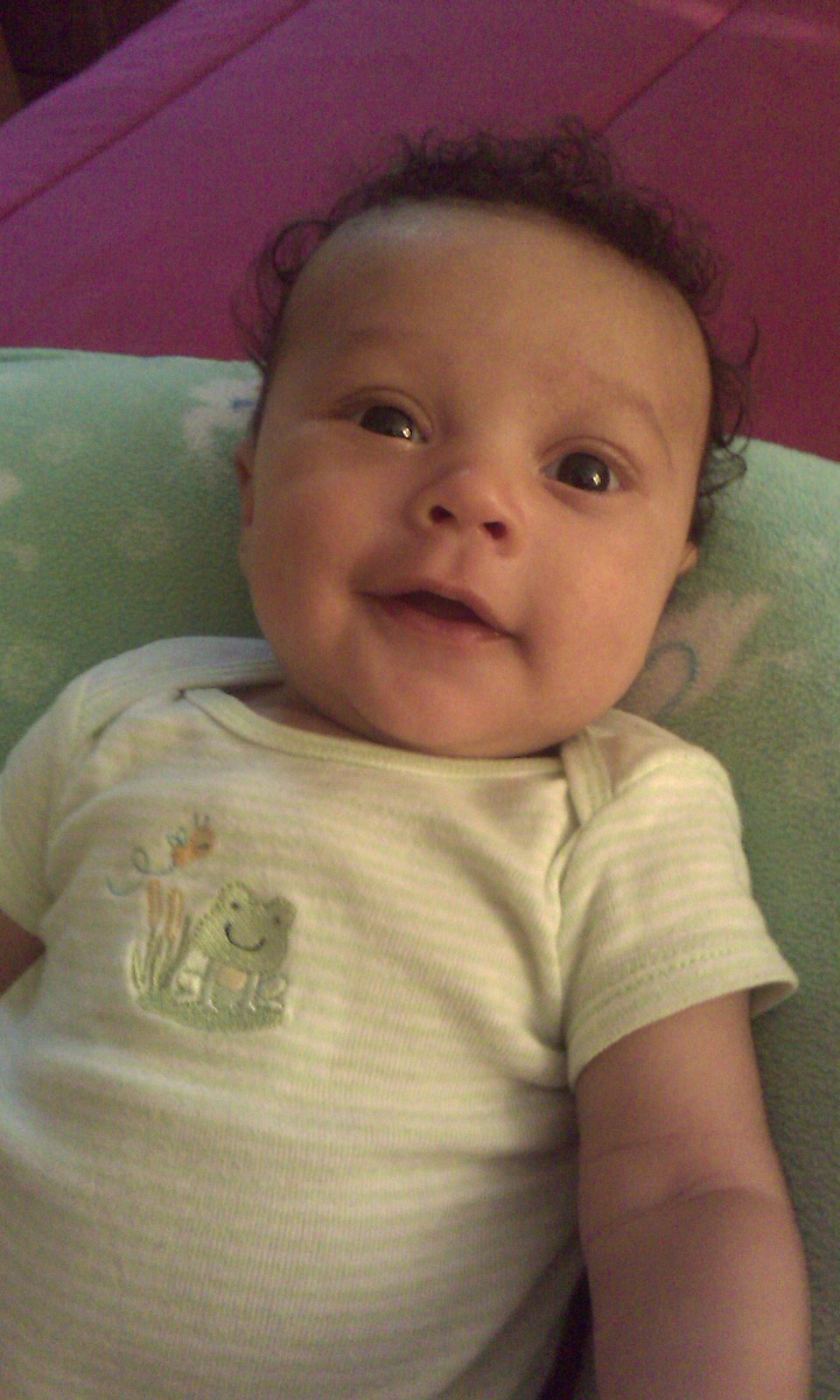
“You can call me Tiny, or you can call me Tim, or you can call me Peanut . . . it really doesn’t matter; I only respond to spitting noises anyway.”

His big brother still tries to tell people that the baby’s name is Brother, but when he is addressing the baby directly, he usually calls him Mr. Baby. While I appreciate that this is a very respectful form of address, that name is also nowhere to be found in the baby’s official paperwork.

I too have fallen into the habit of addressing the infant as Mr. Baby. It makes him sound like a young gentleman of substantial accomplishment. Other times, I simply call him Junior. This worked fine until his big brother adopted it as well. Big Brother’s three-year-old pronunciation of Junior comes out Junjor. To my wife, it sounds like Ginger, which she has already jokingly repeated several times in reference to the baby.

These things have a tendency to take on a life of their own, and I don’t think I want Ginger attached to my son as his nickname. The way we free-associate in my house, we’d soon be calling his brother Mary Ann. Even with all the “A Boy Named Sue” toughening qualities that these names stand to gain the children, I would still disapprove of this development.

My boys could hardly have a couple of prettier namesakes. (Image: United Artists/CBS Productions)

I am simply going to have to pull the entire family back from the Junior word-association thread. I must find a name with a more suitable web of mispronunciations attached to it. If I get desperate enough, I may even have to use the one printed on the baby’s birth certificate.

I have a limited attention span, partially developed motor skills, and little perception of what you hope to accomplish; you need my help

My son is three, which means he has a biological need to help with all of the fun projects that Daddy does around the house. Little boys need to prove how indispensable they are to the proper functioning of the household.

This is a slow process. It will take him until he is about 12 to convince me that I am utterly dependent upon him. When he is 12, we will enjoy just about 3 months of the perfect father-son, symbiotic relationship. Then, nature will endow him with the blessings of teenager-hood, and it will take a girl to get him to do anything.

Since his little girlfriends aren’t likely to beguile him into mowing my lawn, I should get all the work I can out of him before they show up. Unfortunately, a three-year-old’s zeal is hardly ever matched by his handy-man skills. Still, you can’t help but admire the level of enthusiasm.

If I want my boy to instantly appear, all I need do is get out my toolbox. Screwdrivers are his favorite. He will carry a screwdriver around with him for hours, tightening everything in his path, including screws and anything else that needs to be stabbed and turned.

He likes hammers too. Hammers fit in well with his natural love of hitting. He has an uncommon zest for fixing things by pounding them until they are right. Whatever you’ve got that needs adjustment, a wall, a window, a kneecap, he’ll take care of it with his hammer. And he’ll do it all for the intangible reward of being helpful.

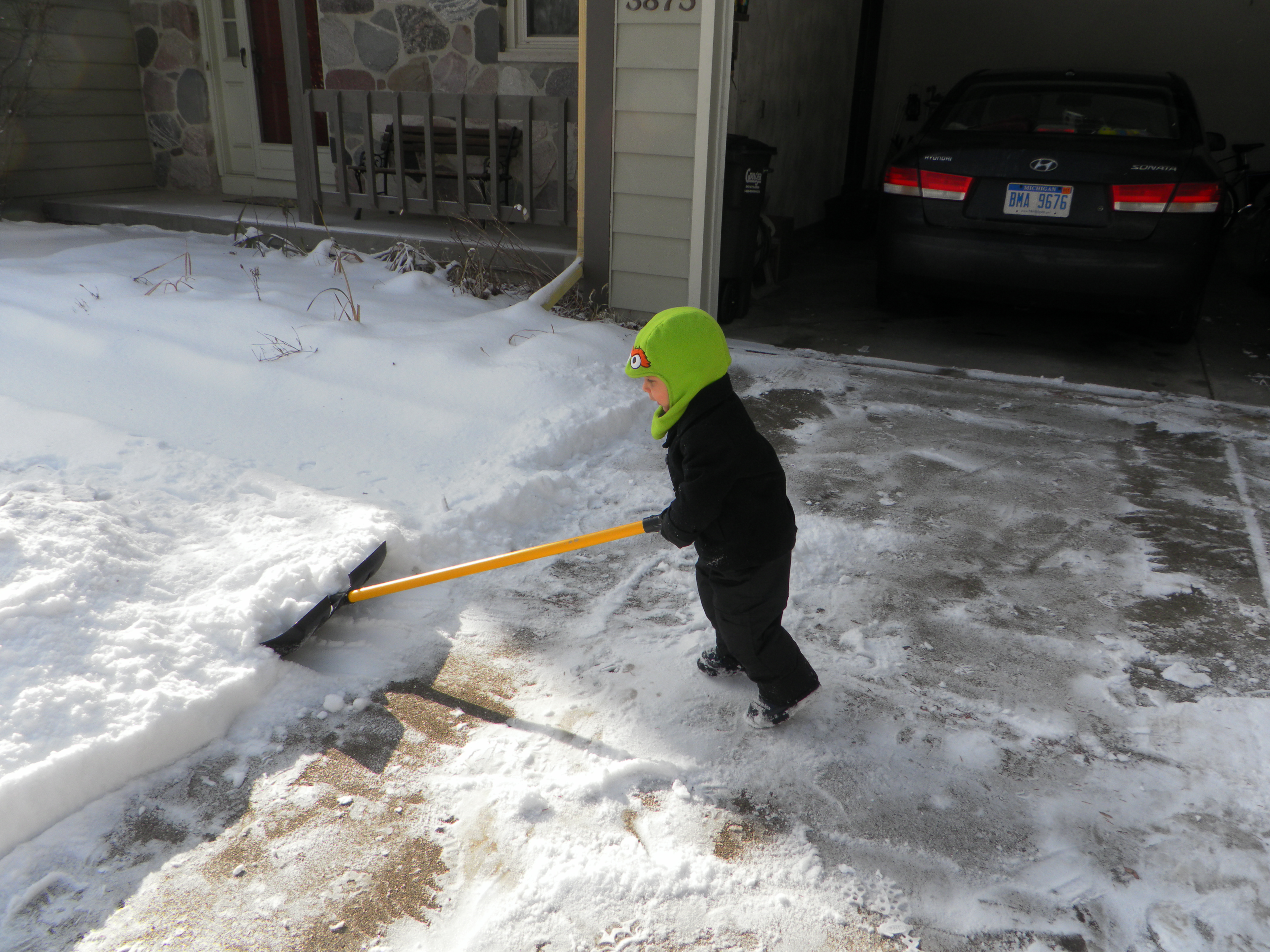
“Here’s an empty spot where we can put some snow.”

A boy who loves screwing things in could hardly avoid falling in love with changing light bulbs. You know the new bulbs? The ones that are all twisty-shaped, save energy by keeping your rooms dim, and are jammed full of poisonous mercury? He really enjoys handling those, because if you want to keep kids from being drawn to something toxic, by all means make it look like a soft-serve ice cream cone. I don’t let him help me so much with these, which really saddens him because he is sure in his heart that he could show me how to install them more efficiently with his hammer.

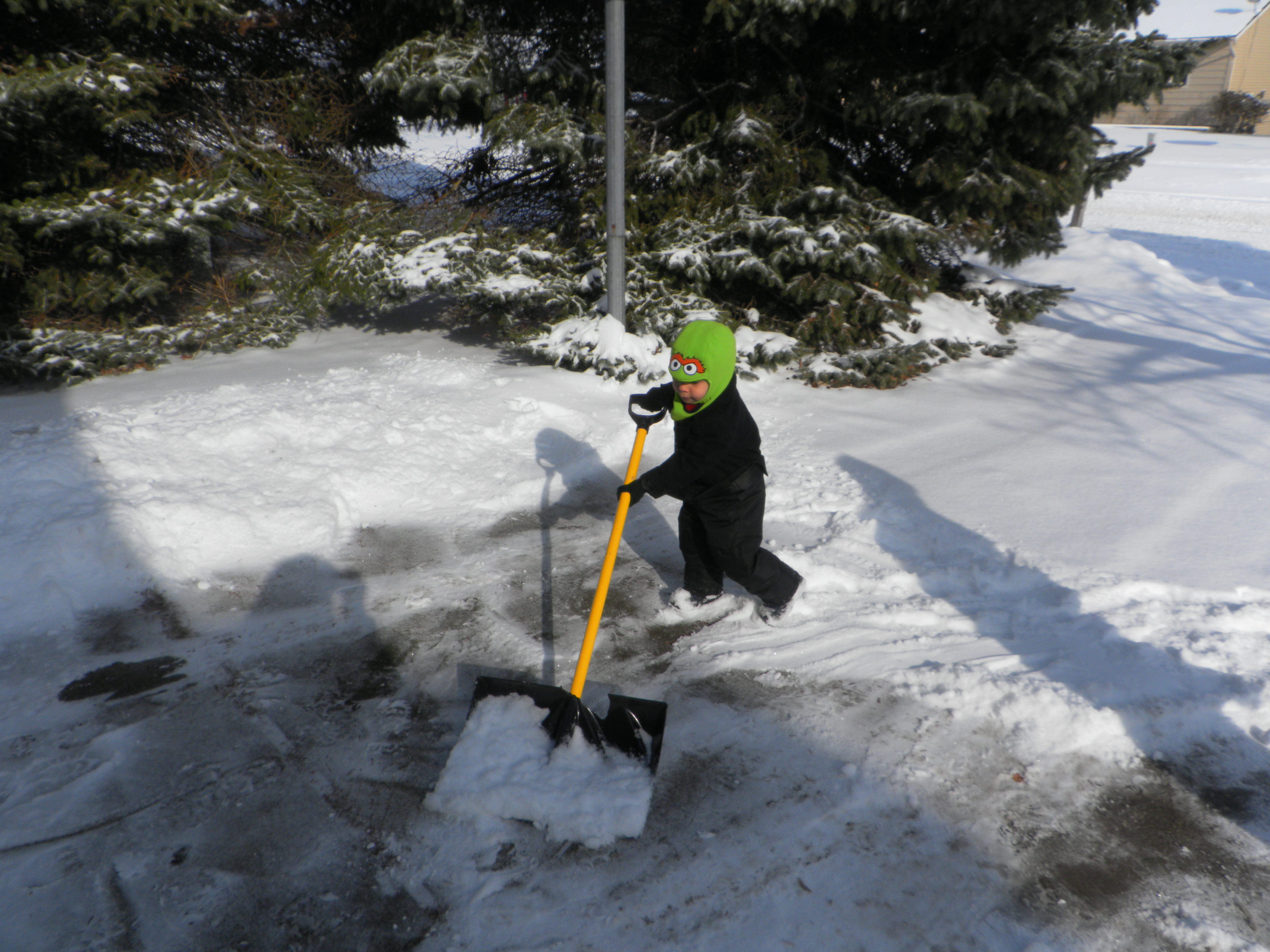
“We’ve got a lot of lawn to shovel off. Good thing we’ve got a clear space in the driveway where we can pile up the snow.”

In the winter, my son helps me shovel snow.  He follows behind me, shoveling snow from the piles I’ve created and dumping it over his shoulder, down his back, and onto the freshly-cleared sidewalk. Between the two of us, we have cut the job down so that we do only three times the shoveling I did when I had to do it all by myself.

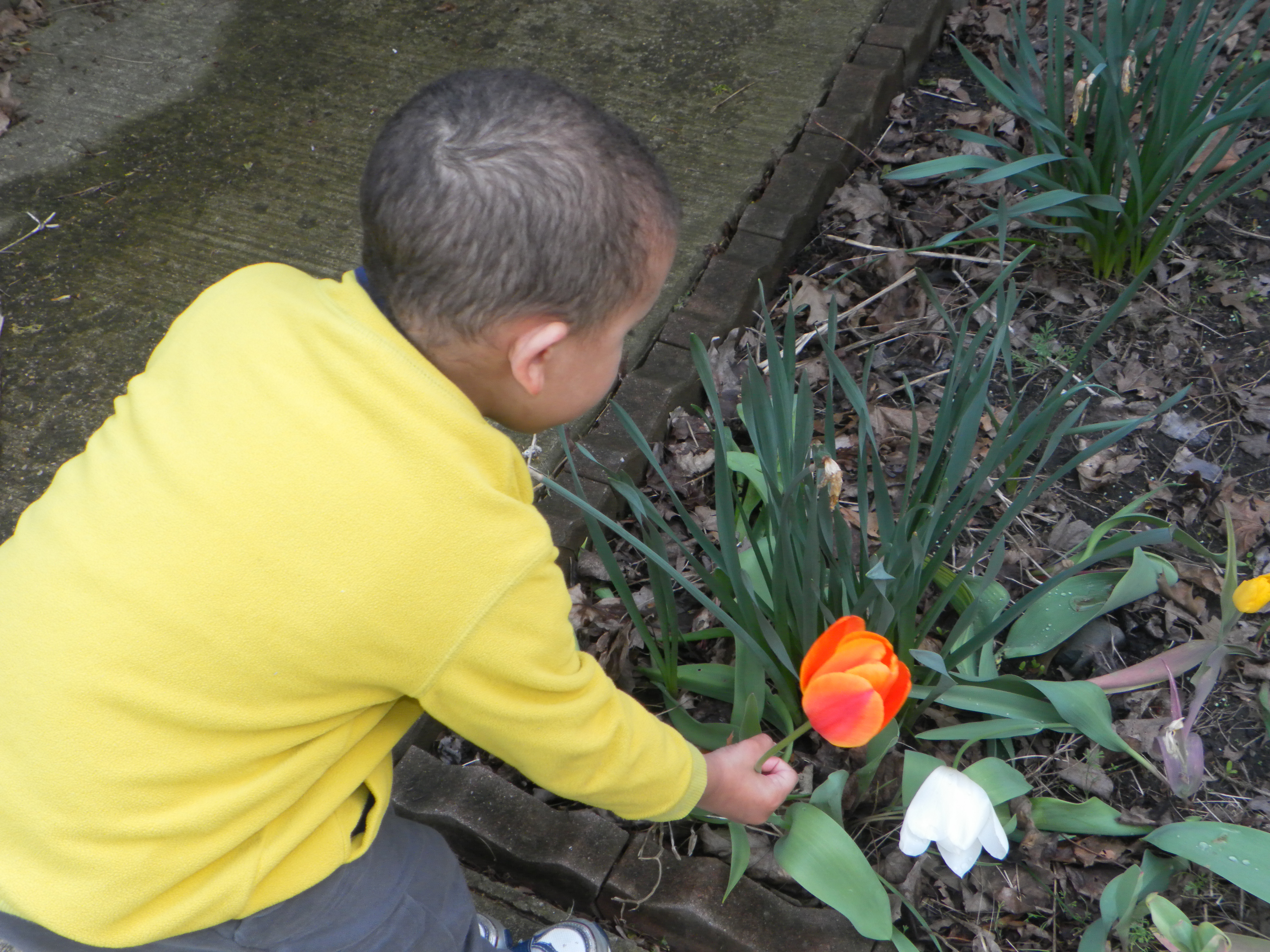
“I’ll get rid of this big, ugly weed for you, Daddy.”

In summer, he helps me weed the flowerbeds. He picks those especially troublesome weeds with all the orange, yellow, and red soft parts at the top. These weeds attract bees, and bees can sting people. I know  he wonders how someone who has been gardening as long as I have could miss the most obvious weeds in the whole garden. Silly Daddy wastes his time on the little green sprouts in between when it is the big, colorful weeds that are using up all the space on top.

It requires extra time to be helped by a three-year-old, but it’s time well spent. I cherish his desire to help, because one day he’ll be 12, and that is practically the cusp of 13. I won’t be as cool then as I am now. Some little girl will come along and steal his attention. What kind of selfish girl would take away the helper of an old man with battered kneecaps?