Halloween relic

Halloween came and went, and it took something with it.

Halloween gave us candy. In exchange it took part of my fatherhood experience away.

For the first time in 17 years, I did not go Trick or Treating. I was no longer needed.

Once upon a time, I pulled a wagon, with a baby passenger, from house to house. I walked with a toddler, holding his hand, until he asked to be carried home. I brought the younger brother, hurrying with him, so the older brother didn’t get too frustrated by the anchor around his candy-gathering ankles. I flitted among three boys of varying ages and speeds, struggling to keep the herd together as three lengths of legs progressed at different strides, slowing down the fast and speeding up the slow so that no one got lost and no one lost faith.

It was exhausting; it was wonderful. Everyone needed Dad to facilitate the fun. As the night grew dark, no one worried, as long as Dad was in sight. Dad was always in sight, because these were his boys, and this was them together.

More than any of them, Dad wished to stay out until Trick or Treat was officially ended. This unifying quest was two fleeting hours, and when it ended, it was ended for an entire year.

After Halloween last year, it ended for always.

Perhaps, Dad should have known, but the hope for one more time is difficult to subdue.

This year, the two boys who still had interest in Trick or Treat, looted the neighborhood under their own authority, which was only right. They had grown into that freedom. They ran with their own pack, as time had long determined they should do.

Dad stayed home, warm and dry, as old people should be kept. He had no more babies to protect. Only memories of babies. Memories don’t make new memories; they stay home too.

One more thing put away in the scrap book, the way it was always meant to be. But I claim the right to cling to the fraying strand of nostalgia.

The way we were.

Don’t bring a knife to a baguette fight

It was Tuesday when I cut my hand on a piece of bread.

This tragedy requires a bit of backstory.

I bought the bread, a $1.49 grocery store baguette, on Sunday morning.

Big Man, who still refuses to eat middle school cafeteria lunches, asked for roast beef for his sandwiches this week. I don’t like paying roast beef prices, but it’s the start of the school year, and maybe this little luxury will help him let go the utopia of summer and ease back into the drudgery of school.

Next week, when summer is a distant memory, we downgrade to ham.

The sliced roast beef looked exceptionally good, lean and red (a rarity in our town). Maybe I too would like a sandwich for some near future lunch.

The kids are happy eating the preservative-doused sliced bread, but if I’ve got to take out a second mortgage to pay for the meat, my sandwich should be on bread with enough dignity to die young.

I picked out a baguette; little did I know, it didn’t want to die alone.

Bread of character, even third-rate, store brand, character, should be eaten in one day. That didn’t happen.

On Monday, Big Man chose to have his sandwich on a hunk of baguette. I didn’t have a chance to make my sandwich. This was my undoing.

On Tuesday, half the baguette remained. I tried to get the boy take it again. “No,” he said. “That bread’s too hard.” I didn’t see the warning in his wise words.

At lunchtime, I cut off a hunk of the aging bread for my sandwich. The previously cut end was too hard to possibly enjoy. I must cut a bit off that end. Though my knife seemed sharp, it struggled through the crust.

I needed more leverage. Leverage is key with baguettes.

This is why I picked the bread off the plate and held it tight in my left hand as I sawed at the end with my right. Finally, I was cutting through it.

And then calamity struck.

The bit at the end gave way. The long piece I was holding in my left hand crashed into the side of my right hand. That’s when I learned that I had not cut off enough. A still hard, and now sharp, edge of crust dug into the skin of my right hand, leaving a splinter of crumb under the layers of scraped skin.

Don’t mock me for my delicate hands. They’re soft, lovely hands that any man would be proud of.

Ah, but I had the last laugh against the bread that bit me. I bit it back many times, with pleasure, and roast beef. I bit it until it was nothing. (After having put it in the microwave to soften it up; I do learn my lesson sometimes.)

Revenge!

Killing me softly

If you have teen or pre-teen children and you don’t realize they are plotting to kill you in a myriad subtle ways, you’d better get wise. Society won’t forgive you for leaving those poor, helpless, homicidal maniacs orphaned when you might have done something to prevent it.

One of the ways my children are trying to kill me is through diabolically altering the volumes of their voices so that I hear everything I don’t want to hear and nothing I do want to hear from their mouths.

The things I don’t want to hear are many and pervasive: the screams that rattle my skull from boys chasing each other around the house; the high-decibel appeals for parental intervention as they take turns hitting each other in fully justified counterstrikes; the shrieks of tormenting laughter from two kids who have teamed up into allied mockery against the third, and the wailing, whining cries for justice from the outnumbered victim.

And all of this is before they have friends over.

You would think these children would never struggle to make themselves heard.

This is the paradox; they often speak too softly, though not as often as they scream too loudly.

I possess a supernatural power to make my kids inaudibly quiet, and all I have to do is ask them a question.

“What do you want from the drive-through?”

 “*Whisper, whisper, whisper*, “and a vanilla shake.” (They make sure I hear about the shake; a $6 add-on will hasten Dad’s demise nicely.)

“Is your homework done?”

“*Mumble, mumble, mumble*”

“Did you brush your teeth yet?”

  *Shrug*

“Is your homework done?”

Even in the prime of my youth, I struggled to hear conversations when there was background noise. This is how I unknowingly agreed to random things in crowded college bars by smiling and nodding in response to unintelligible conversation. My children know this about me.

Over the many years since the prime of my youth, my eardrums have aged substantially. My children know this too.

This is how the plan to get me. They drive up my blood pressure with their screaming and yelling. Then, they amplify my hypertension to a crescendo by giving answers I have no hope of hearing when I ask a question.

They have made a sharp skill of looking away, or sneaking behind me, when they offer their mild answers to my questions.

If you are not careful, children will practice speaking to you from a different room, which is a skill I’m sure they learn from wives.

I plan to avenge my own death by not dying at all, not right away anyhow. Instead, I will continue to lose my mind. They will have important questions to ask me soon:

“Can I borrow the car?”

“Can you co-sign for me?”

“Why do you keep running away from the nursing home?”

“Have you made out a will?”

I will answer all these questions with a clear voice and a distant, glassy stare: “I want a vanilla shake!”

My promotion to 5th grade in 1977 must have been a clerical error

“Dad, how do I do this?”

I get this question every time there is a big 4th grade or 6th grade project due.

I thought I had completed both of these grades back in the 1970s. I never suspected I would be made to repeat them, and certainly not after this many years.

Big Brother, now a 10th grader, doesn’t ask my help on schoolwork anymore. Once he got to high school and settled into being a teenager, the notion struck him that he was smarter than me. This notion does not only pertain to scholarly pursuits, but also, and more importantly, to the scope of freedoms and privileges a young man should be allowed while making the most of his parents’ hospitality.

If Buster and Big Man believe they are smarter than I am, they keep dark about it. They realize the unseemliness of asking the big dumb guy to do your homework for you. For now, they let me believe I’m smarter than a 4th or 6th grader. I suppose they’ll let me know how things really stand after they don’t need me anymore.

I don’t mind helping them here and there with a difficult math problem or vocabulary word. It’s the big projects that are trouble. They are both daunted, nearly to the point of paralysis, by big school projects. They hide from the project for five and half weeks, hoping it will fade out of existence in the last three days.

At some point within the last three days, they realize it is still there. This is when the problem gets referred to Dad.

Most of their projects require the reading of a book. They may, or may not, have read the first 20 pages in the previous 39 days.

Dad’s first task is to hound them to read the book, or at least enough of it to know the main character’s name and to be able to make a wild guess as to what the major conflict could be.

That’s the easy part.

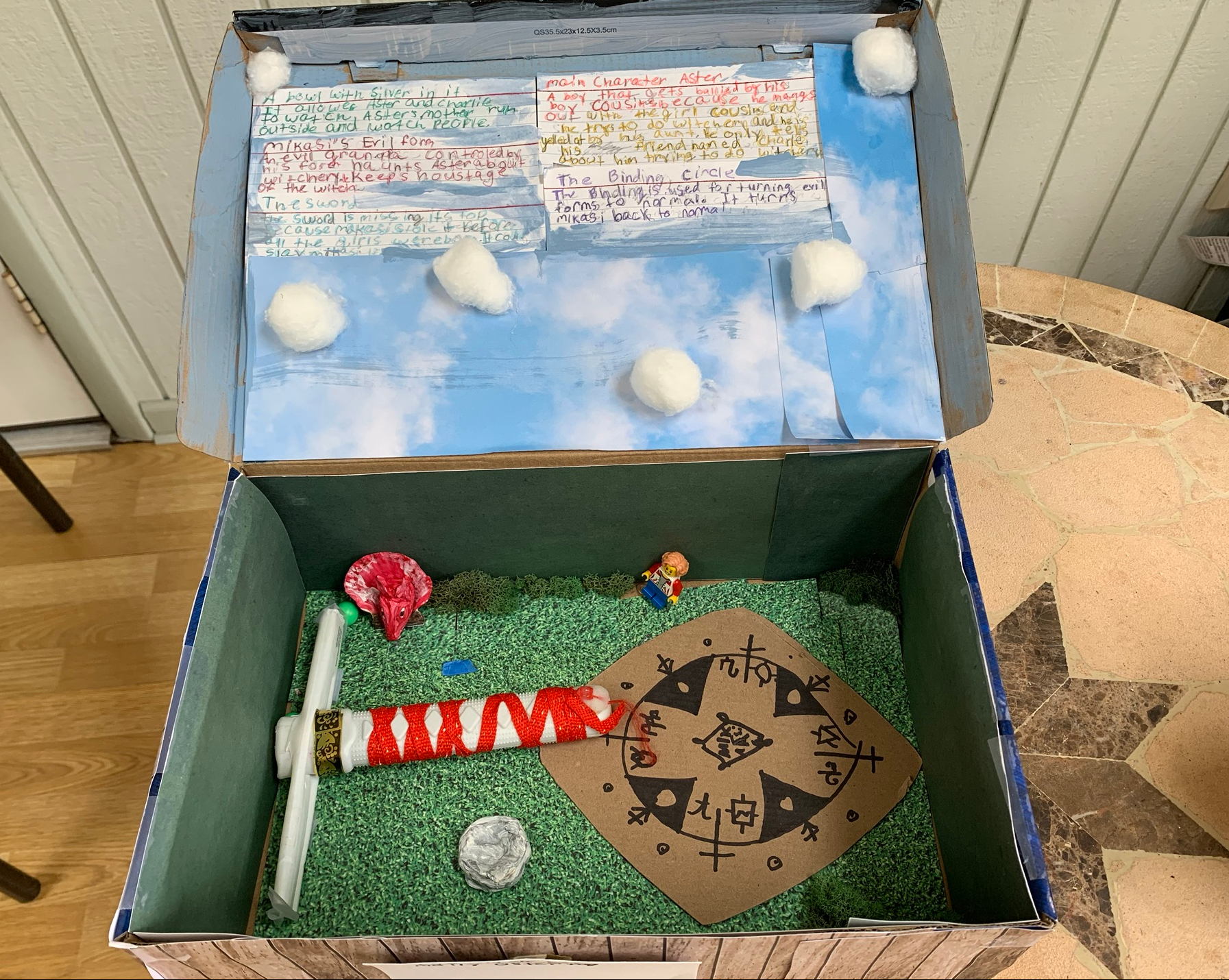
Today’s teachers aren’t satisfied with students reading a book and showing their comprehension of its themes. They want pupils to be able to do arts and crafts about it.

Buster, Big Man, and I are all creative in our own ways, but rarely does that creativity spill into the realm of arts and crafts. I read a lot of books, yet I can’t recall a time when I’d finished a novel and been inspired to fashion a paper doll in homage to the protagonist.

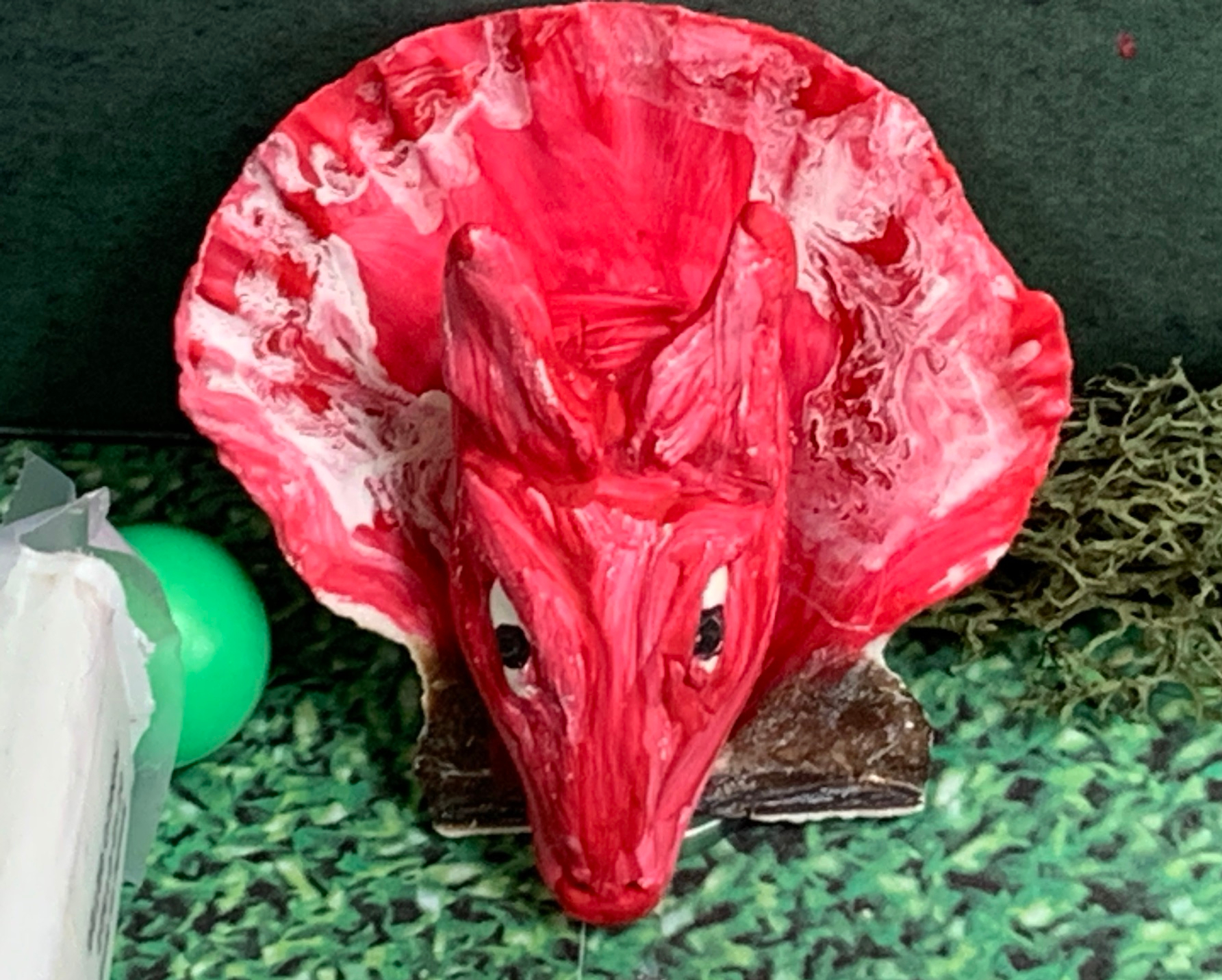
Perhaps I am out of touch with modern times, because it seems that every book must inspire some diorama or figurine. After stumbling through the book, this is where my boys fall flat. They fall flat on top of me, the man who waits, with his bag of popsicle sticks and Elmer’s glue, to memorialize in sculpture every book his reluctant children are forced to read.

I would be a more active blogger, but with Buster so close to junior high, I must devote my time to perfecting Play-Doh replicas of Romeo and Juliet.