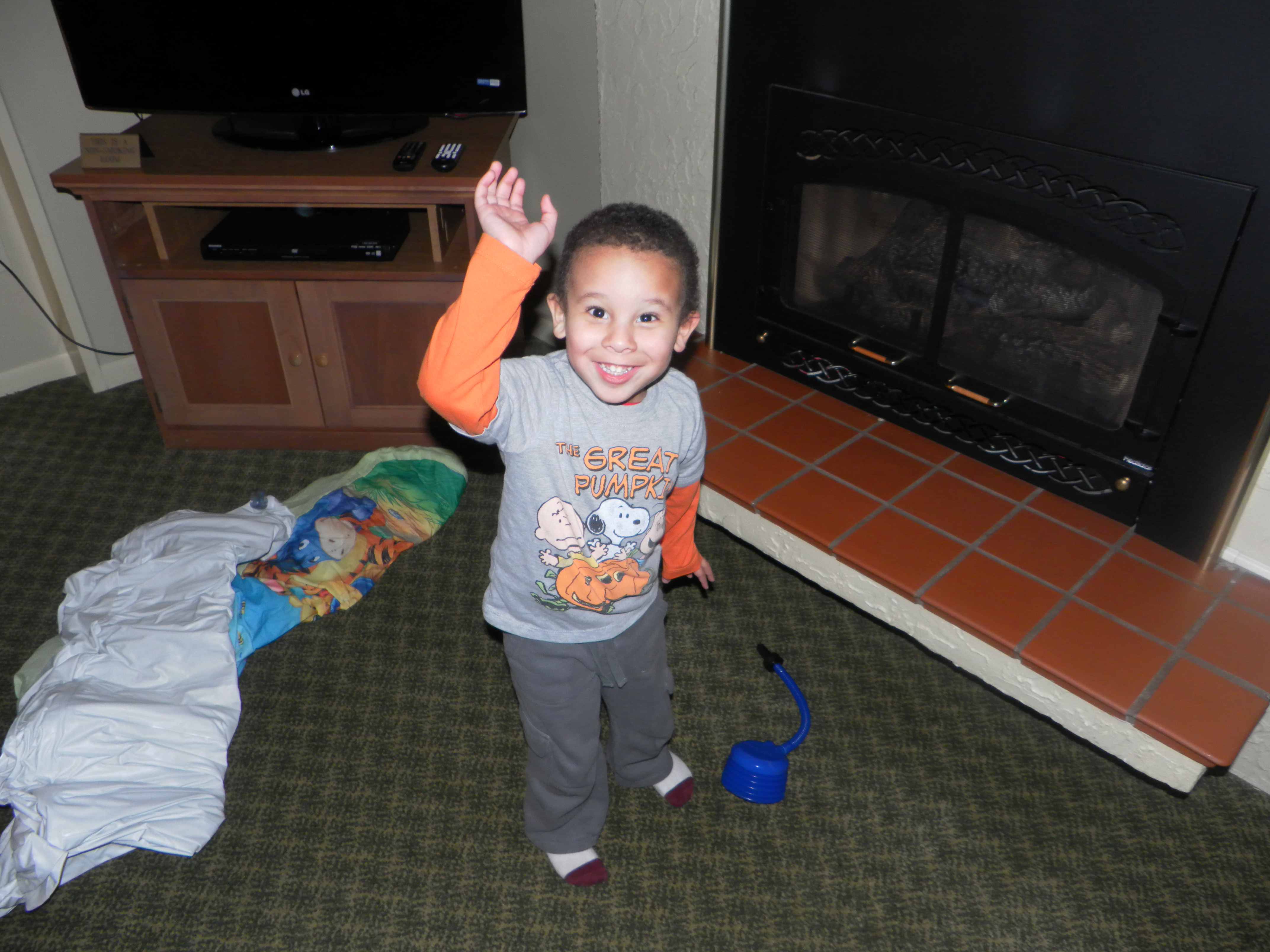
Learning + play – learning = fun

I’m normally a very Do-It-Yourself oriented person. Before I consider paying somebody else for a service, I make every effort to do it myself. I have never needed surgery, but if I ever do, I will read all about it on the Internet to see if it is an operation I can knock out over the bathroom sink before I fork over a dollar to a “trained” surgeon.

As I pay a preschool big wads of money, in hopes that they can teach my son to read, or at least get him close, I wonder where my awesome self-reliance went. It is deflating to my rugged individualist ego to throw in the towel on this issue; nonetheless, the towel is wadded into a ball and my arm is cocked into pitching position.

I should be able to teach my own flesh and blood to read. To begin with, I can read myself, which is half the battle. I should be able to find the time, patience, and discipline to get him reading. It turns out, those things comprise the much larger half of the battle.
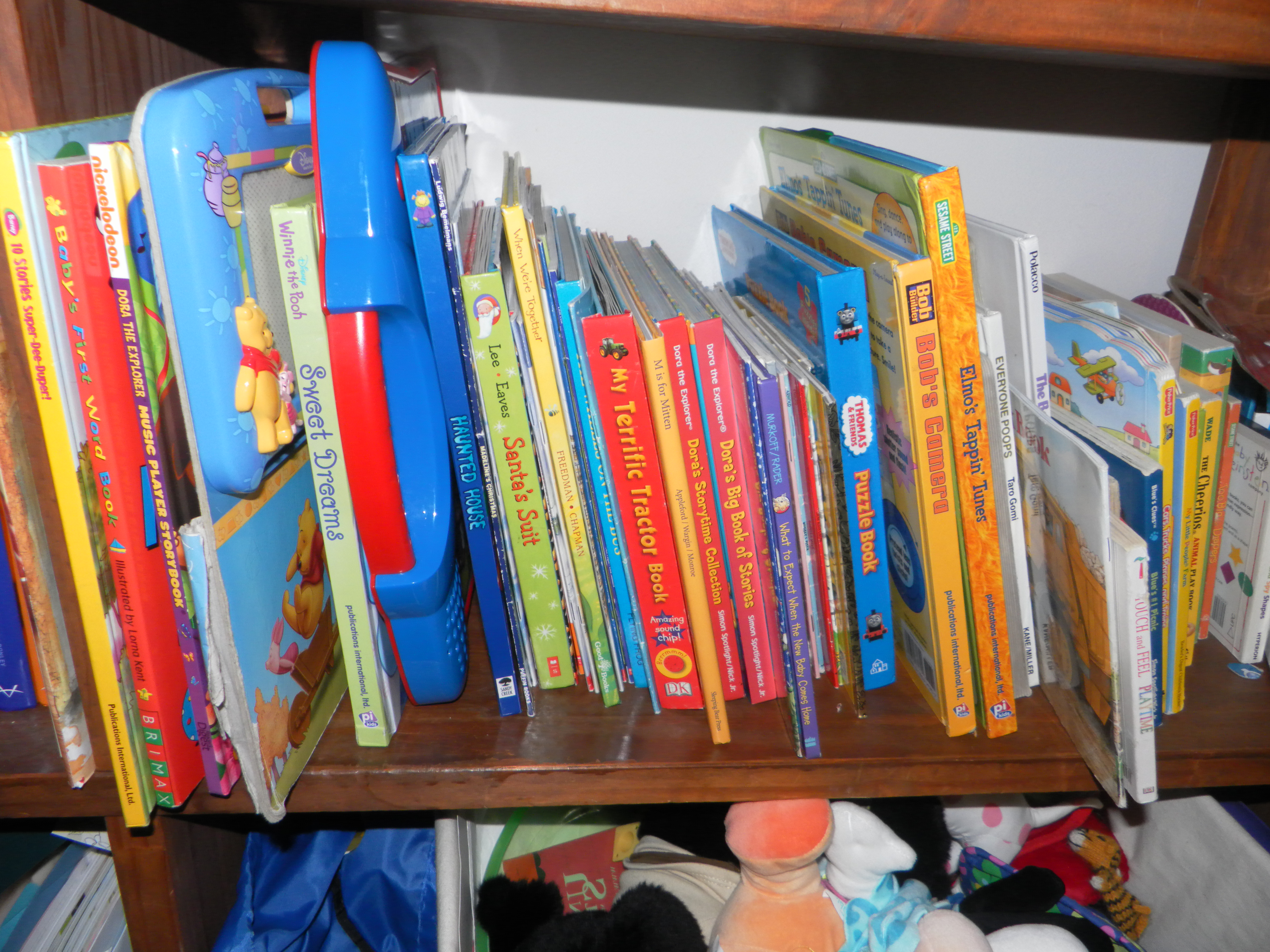
We need to train another reader to help me get through these books. The backlog has spread to shelves all over the house. This work is seriously cutting into my play time.

There are a surprising number of halves to this battle, most of them unconsidered during those callow days when I entertained glorious dreams of educating some future, theoretical child at my knee. Discovering all these extraneous halves has led me to the disappointing conclusion that I probably should not be the boy’s mathematics tutor either.

A considerable half of the battle is the one wherein the boy considers it a waste of his time to learn to do something that his parents can easily do for him. We have two experienced readers in the family,  leaving us with a spare, in case the one reading the bedtime story conks out. Surely, that is enough for any household. A child who learns to do things for himself opens himself up to the burden of unwanted responsibilities. Where does it end? Soon, they’ll be troubling him to tie his own shoes.

It may be an obvious half of the battle that the boy would rather play than work on academics. Learning is work, and so is teaching, which is perhaps part of the reason why we commonly pay people to do it. After the 100th time Daddy implores his distracted pupil to “sound it out,” it dawns upon him that he has already gone through the learning-to-read process once in his life. It was a slog then, and it’s a slog now. There’s no good reason to go through this drudgery twice in one lifetime. As the boy has pointed out, everybody could be using this time to play.
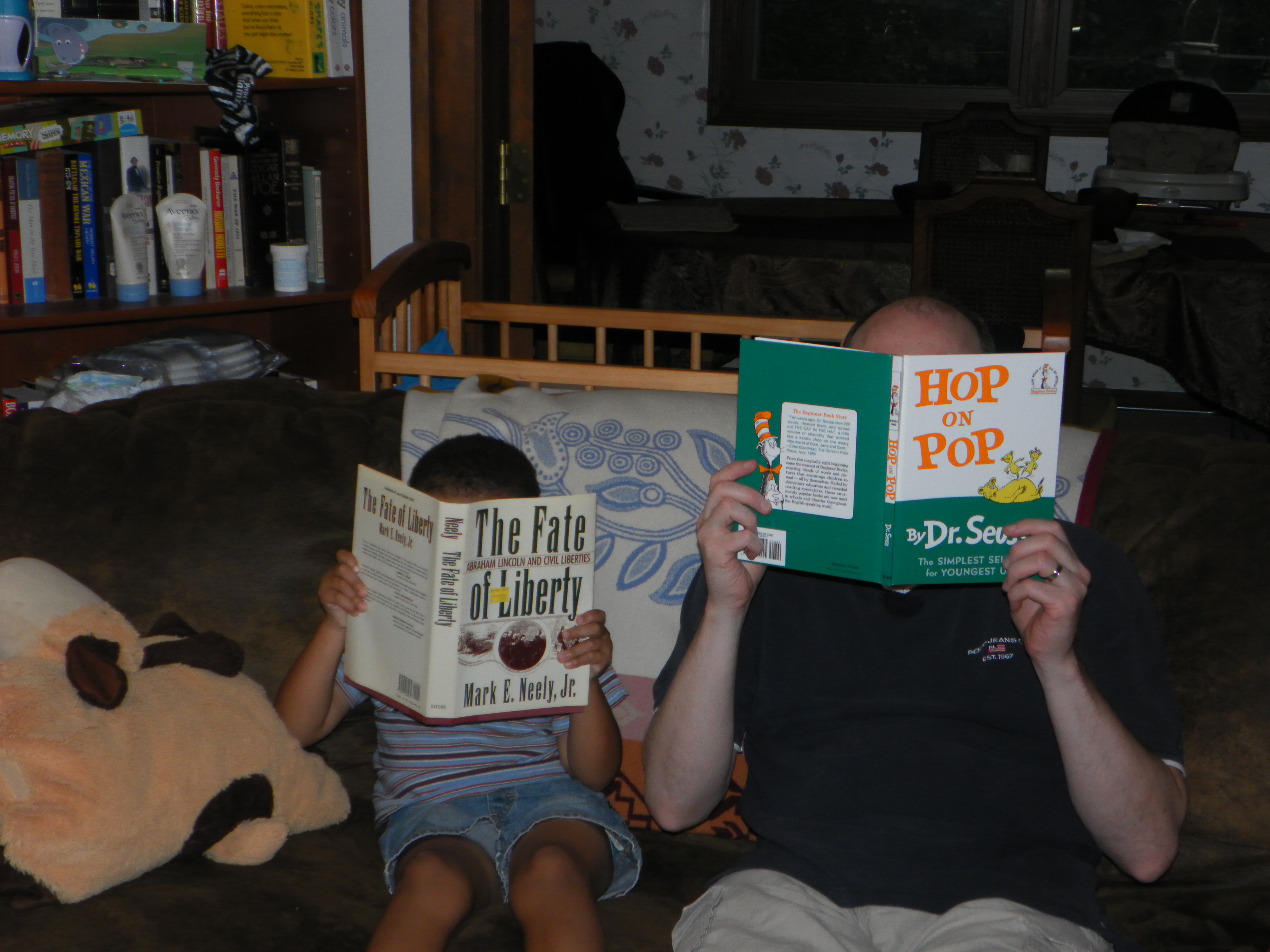
Reading is fundamental. I learned that from all the commercials I saw on TV as a kid.

This battle has at least 14 too many halves for Daddy. Mommy is much better at sticking to it, as well as getting the boy to stick to it. Mommy has laid a good foundation, but even Mommy’s diligence has its limits. It may be worth the money to have someone, whose credentials go beyond the mere ability to read, take a hand in the process. If nothing else, it is sure to take some of the guilt out of play time.


It’s a loose interpretation

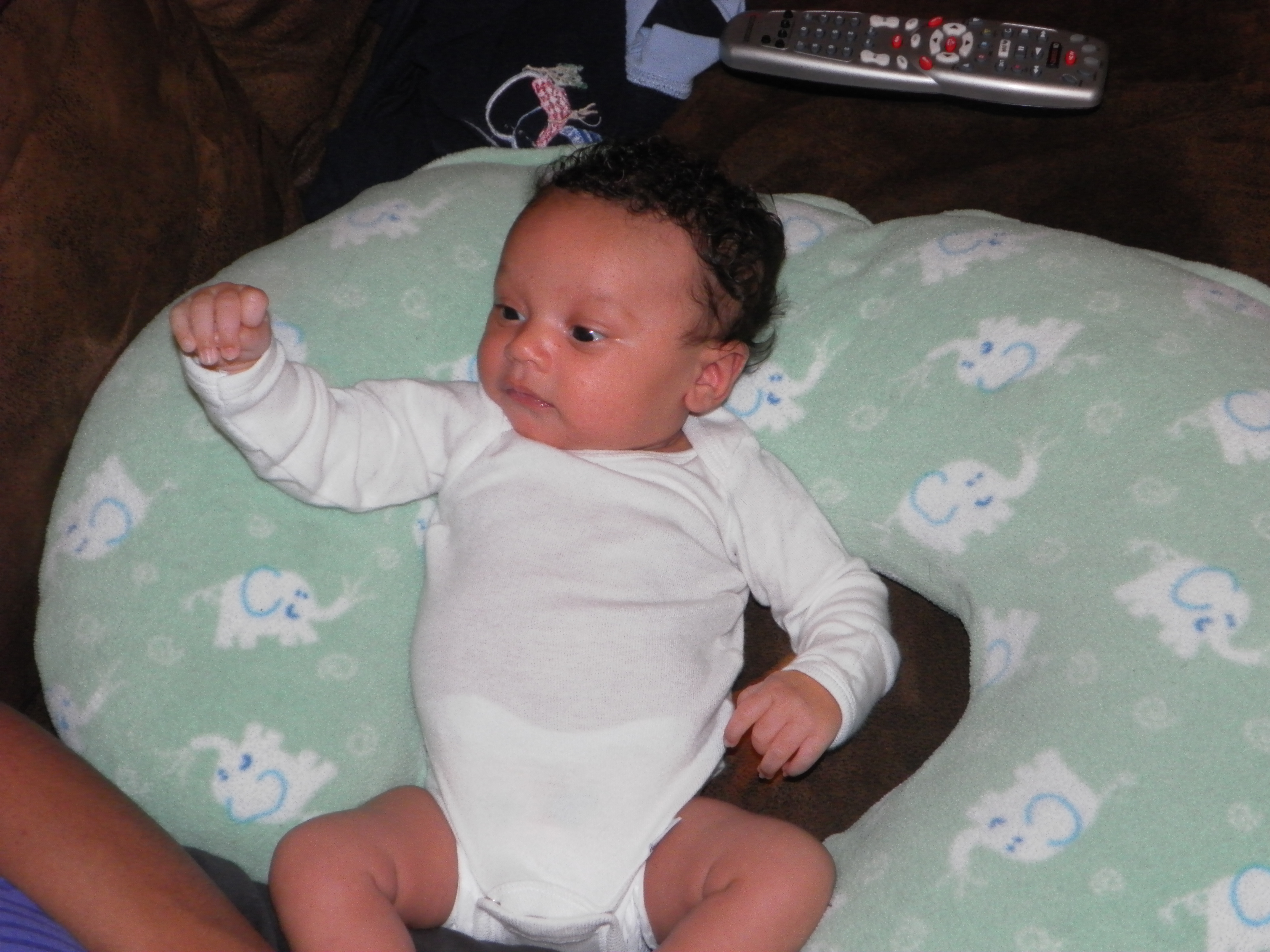
You can’t be around a baby for any length of time without wondering if the baby’s cries have a specific meaning. If there is a language of babyhood, it would be gold to parents to understand it.

“Why can’t you people understand me? I’m crying in the plainest language possible!” (via Wikipedia)

At some point in every young life, a divide is crossed, between baby consciousness and the consciousness we carry for the rest of our lives. There is a strict no-reentry policy within the arena of baby consciousness. Once you leave, you’re out for good, so try not to leave anything you need inside the fence.

Our baby cries a lot when Daddy is in charge of him. Naturally, I am keen to know the cause of his displeasure. Since my wife, the cat, and I are all too old to still have a foot planted inside the baby consciousness compound, I pinned my hopes to my three-year-old son. Maybe he still remembers some of the lingo.

For a while, every time the baby cried, I pushed the three-year-old at him. “What’s he saying?” I asked, as if I were Lewis or Clark, the boy were Sacagawea, and the baby were some random Shoshone we ran across on the trail west.

My son couldn’t translate a single wail. This shouldn’t have surprised me; the boy can’t identify the problem half the time when he, himself, is crying. Besides that, he clearly no longer understands Babyish. And why should he? As he has often pointed out, there are no two things on earth more different than a baby and a big boy.

Having given into his prideful instinct to culturally distance himself from the baby, the boy has discovered that he has burned a bridge that might have been useful to him. Only too late did he realize the influence held over communication by the interpreter.

The boy has backtracked, now pretending that he does indeed understand the baby’s tearful messages. “He wants some milk,” the boy once explained of the baby’s cry. “And he wants you to get me some ice cream.”

“He says they’re debating whether to kill you all or let you go in peace. Also, he would like you to go get me a cupcake and some fruit punch.” (Artist: Charles Marion Russell)

This fraudulent translation would be transparent under any circumstances. Yet, I think the boy attributes my disbelief to the fact that he has already disavowed any knowledge of baby-speak. I can see him thinking that he would get away with it, if only he had pretended to understand the baby from the start.

Still, there’s no harm in trying. When the baby begins wailing, the boy will interpose himself and his useful services. “He says he wants to be with Mommy so you can build a track for my train on the floor.”

And if I have a good reason not to do what the baby asked: “It’s too late to get out the train set. It’s almost bed time.”

Well, the baby covered that, too. “He said he’d be so happy if you let me stay up late tonight.”

I can tell the boy is mentally kicking himself for giving me reason to doubt the faithfulness of his translations — he’s kicking himself all the way upstairs to bed.

Who stole my beautiful moment?

Normally our three-year-old is still asleep when I leave for work in the morning. One recent morning, he woke up before I left. As I was picking out a tie in the bedroom closet, he walked in and sheepishly asked me if I were going to work. I told him I was.

“You shouldn’t go, Daddy,” he said. “I’ll miss you.” His head was down, so I couldn’t see his face, but I could hear him sniffling between his sentences. He was crying.

I dropped to my knees and gave him a hug. He held me tightly. “I don’t want you to go,” he sobbed into my ear.

Beauty and sadness are first cousins. They often come as a pair. This was our beautiful, sad moment – beautiful in its expression of affection, sad because neither one of us wanted me to have to go to work. Sadder still because I had to go.

But I have dealt with the sadness born of having to go to work every day for more than 20 years, so I was able to look past it (just like I do every other morning) and enjoy the beauty of a boy wanting to spend his valuable time with his dad.

Beauty is fleeting, especially after it has been shorn of sadness. Our beautiful moment started to decay as soon as my wife entered the bedroom. My son and I happened to be sobbing it up like madmen just a few feet from where the baby was sleeping in his cradle. Being a mother, my wife is the guardian of silence within earshot of the sleeping infant.

“What’s all this racket? Don’t wake up the baby!” she demanded in that urgent, motherly whisper that is specially designed to be heard loud and clear by non-babies while skirting the infant ear altogether. “Take it out in the hall!”

A mother, of course, has no time to weigh the nuances of a father-son moment when she is shooing disturbances away from her sleeping baby. That much is clear.

My son and I picked up our hug and removed it to the hallway. Our beautiful moment had been relocated, but it might still be salvaged. I took up the mantel of salvation by explaining, “I have to go to work to make money so we can buy groceries. Work pays me so I can buy food for us.”

Every payday, Daddy sets off down that lonesome track to bring home his sack of groceries. (Photo: Marion Post Walcott/US Farm Security Administration)

“No,” the sweet little guy insisted. I heard his disagreement as proof that he would rather go hungry than have me leave him. It was actually the noise of the cracks in our beautiful moment spreading toward the shattering point. “Work pays you so you can buy toys.”

“They don’t pay me enough to buy food and toys,” I explained.

“Then we can just buy toys,” he replied, now completely comfortable with the notion that Daddy had better get himself off to work before he got his toy money docked.

Our hug dissolved of its own accord. Economics had won out over sentiment. Parents have to work in order to afford toys for their kids. My son understood this now, and he wished me well.

Beauty is fleeting.

Cleanup on aisle two

This has gone beyond the point of coincidence. It’s beginning to feel like a conspiracy.

As soon as I finish making something to eat, one of the boys needs my assistance with a poop event. It doesn’t matter if it’s lunch, dinner, a snack, dessert, whatever. I’ve got my hands all washed up; I’ve got my food, hot and tempting, on the plate; and I’ve got a kid who can’t hold it for 10 minutes.

I use the broad term event because the poop assistance needs of a three-year-old and an infant are very different. The older boy can do most of it by himself, but it really isn’t going to matter until he can do all of it by himself. Until then, a hot lunch will have to always be a dream deferred.

In many ways, the three-year-old’s events are more disruptive to my meal plans. He really only needs me at the very end (unless he forgets his toddler potty seat), which means I’m on call for however long it takes him to speak those three little words that stir every parent’s heart: “Daddy, I’m done!”

Dinner is ready. Now who’s been waiting all day for this moment to go potty?

I really don’t want to start eating, knowing what I am likely to be called away to do halfway through the meal. I could just make him sit there and wait, but that seems like a cruel and unusual form of time out. It’s better to just delay eating, or maybe forget about it altogether.

If Big Brother doesn’t put me on standby, the baby is sure to pick up the slack. He announces his event by starting up his motorcycle. We call it that because it sounds like he’s revving up a Harley when he lets it rip. Big Brother thinks it’s hilarious. I think it means the salad dressing is going to make my lettuce get all soggy before I can taste it.

The baby’s poop events can be dealt with more quickly, unless he decides to enjoy an open-air pee in that free and wild moment between diapers, or he holds something back with which to christen the fresh diaper. Whenever he needs to quake out an aftershock, he always has the courtesy to wait until I’ve washed my hands once more before he hops back onto that motorcycle.

“Uh, excuse me, Daddy. You might want to put your fork down for this one. I’m gonna try to hit the high note here.”

These boys are so reliable in upsetting my meal plans that I begin to think I must be cursed. I’ve tried to comb through my past, searching for any incident that might have resulted in my insulting some sort of boom-boom gypsy. What offensive act might I have committed to inspire the potty time wizard to open up his book and cast spell number two? Did I cut in front of some sorcerer in the line for a porta-potty in my untamed youth? I don’t remember.

If you are out there, offended one who put this hex on me, please accept my humblest apology for whatever my crime, and let me once eat a hot meal with fresh air in my nostrils.