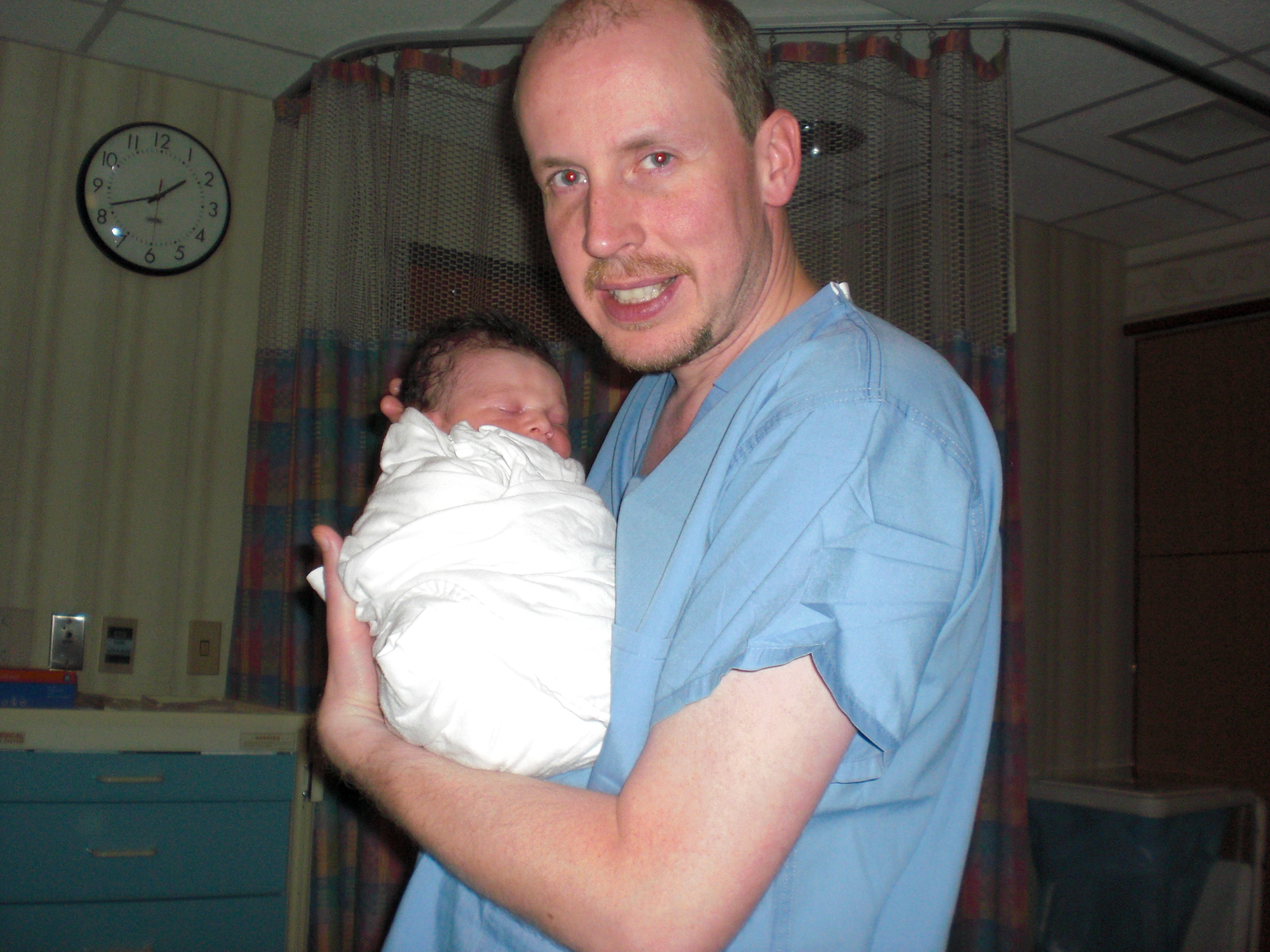
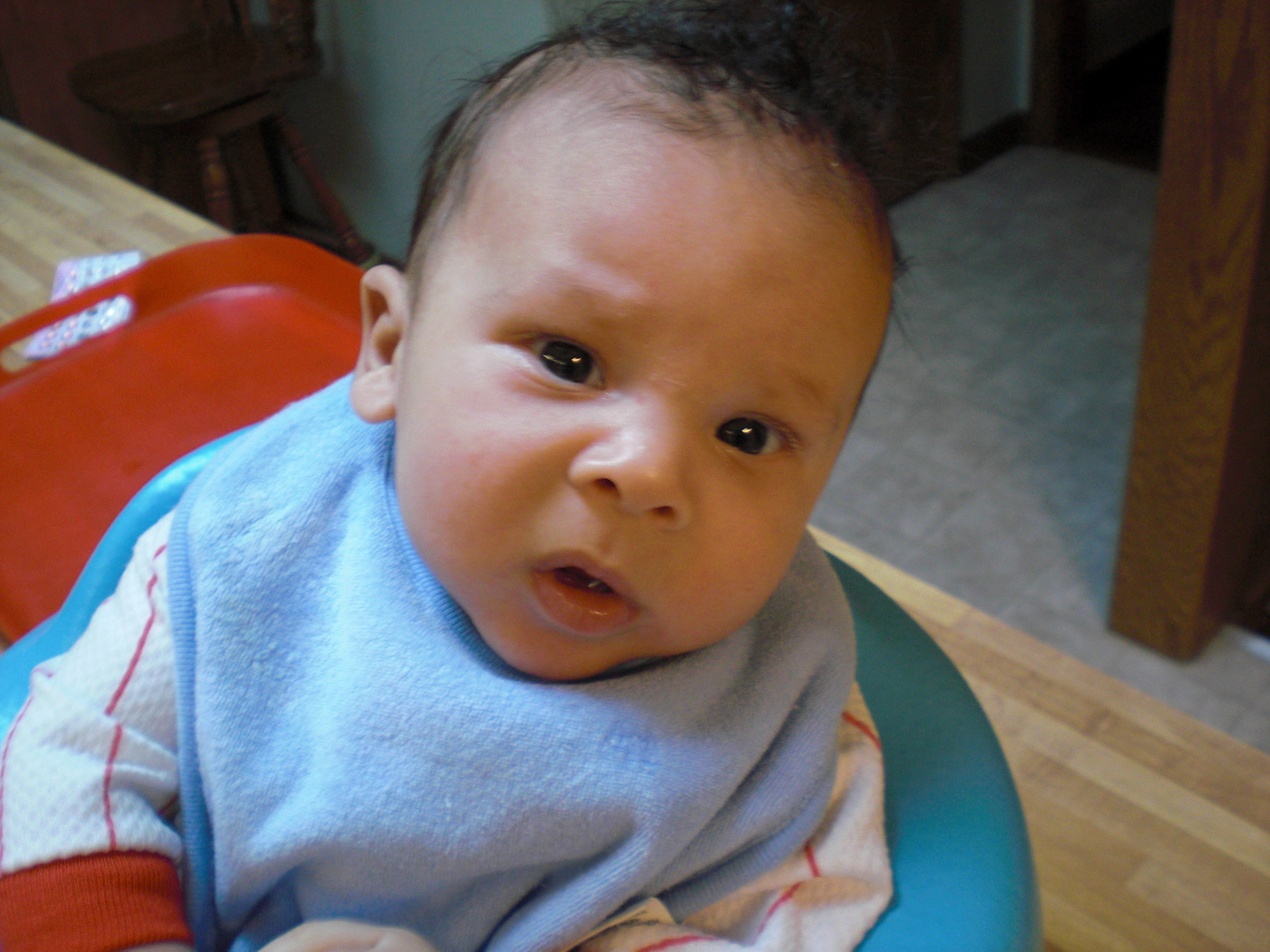
Bonding with the baby bump

At eight months pregnant, my wife is not so fond of people impulsively rubbing her belly. I understand her position perfectly. If there were something about my belly that made people want to reach out and paw at it whenever the whim struck them, I can imagine that I would be sensitive about it too. Fortunately, my belly is completely uninspiring; people would rather soak their hands in a bowl full of leeches than cop a feel of my spare tire.

Though my wife is rather reserved when it comes to sharing her baby bump with the fawning masses, she can’t seem to have my hand affixed to that bump enough. I believe she would glue my palm to her navel if she thought it practical.

This baby kicks, punches, and generally bounces himself off the walls of the womb with remarkable energy. I don’t remember this much activity with the first pregnancy. My wife seems intent on sharing every one of these movements with me. I’m all for feeling the baby kick, when it is convenient for me to sit next to his mother and gently place my hand upon her belly. I am all about the miracle of life, and I agree that it is thrilling to feel tangible evidence of our forthcoming bundle of joy.

However, I don’t think that I should have to come running from a different floor of the house to dive at my wife with my arm outstretched in order to feel the movement, before it’s too late, every time the baby hiccups. Yet, this is what is expected of me. At any time of the day, I might hear the alarm, “Quick! Quick! The baby’s awake. Come feel him.” True to my duty, I drop everything and comply, only to get kicked in the hand for my trouble.

I originally thought I was obeying the mother when I came running to get my feel, but it was explained to me by the mother that I am actually being summoned by the baby himself. “He needs skin-on-skin with his daddy,” she said, ignoring the fact that my hand was resting upon her epidermis.

It was further explained to me that, beyond needing to feel his daddy’s touch, this baby needs to hear his daddy’s voice every day. “Have you talked to your baby today?” I get asked by his spokeswoman as she thrusts out her belly button like it’s a walkie-talkie. Even in the privacy of my own home, I feel a little shy about speaking into a belly button. And what kind of conversation do you strike up through the uterine wall? “Read any good books lately?” On top of that, the kid can’t seem to figure out the intercom system, so I can’t even hear his replies.

Still, I do the best I can at meeting this baby’s many needs. I must confess though, there are times when his movements are so visually shocking that I must pull back my hand in horror. My wife is a petite woman, so any big movements make her belly fluctuate profoundly. Many times I have anticipated seeing an alien hand pop out of her to grab hold of my puny, human wrist. At other times the movement merely resembles the massage balls revolving beneath the cover of a shiatsu chair. This image is less frightening and I can usually be convinced to put my hand back.

Our sweet little dictator in his command and control pod.

Even though I value these last couple months of being able to sleep at night and not having to change diapers, there’s a growing desire within me to have this baby come out and face me eye to eye. Then he can tell me directly what his needs are. You never know if you’re getting the straight poop when you’re working through an interpreter.
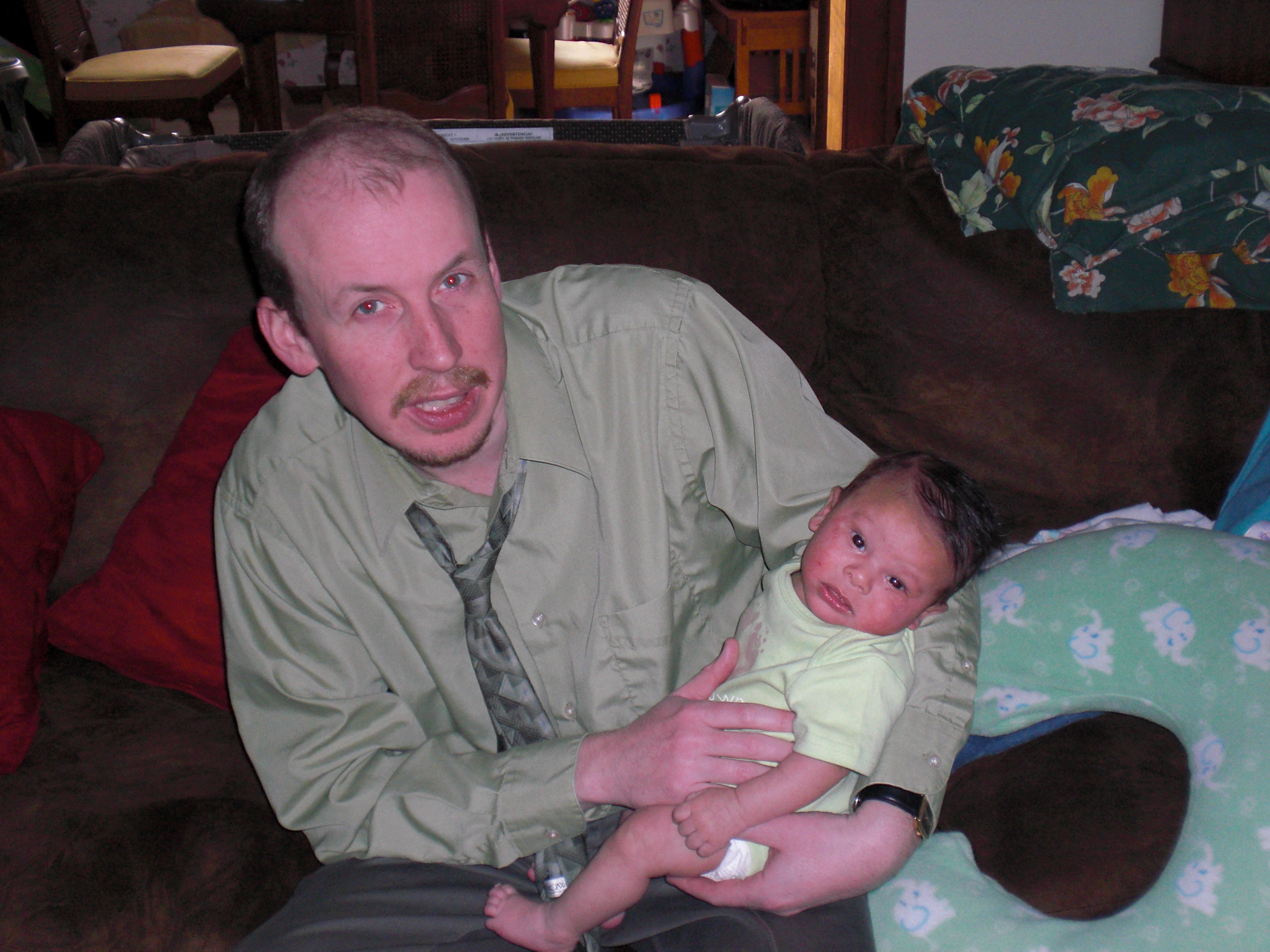
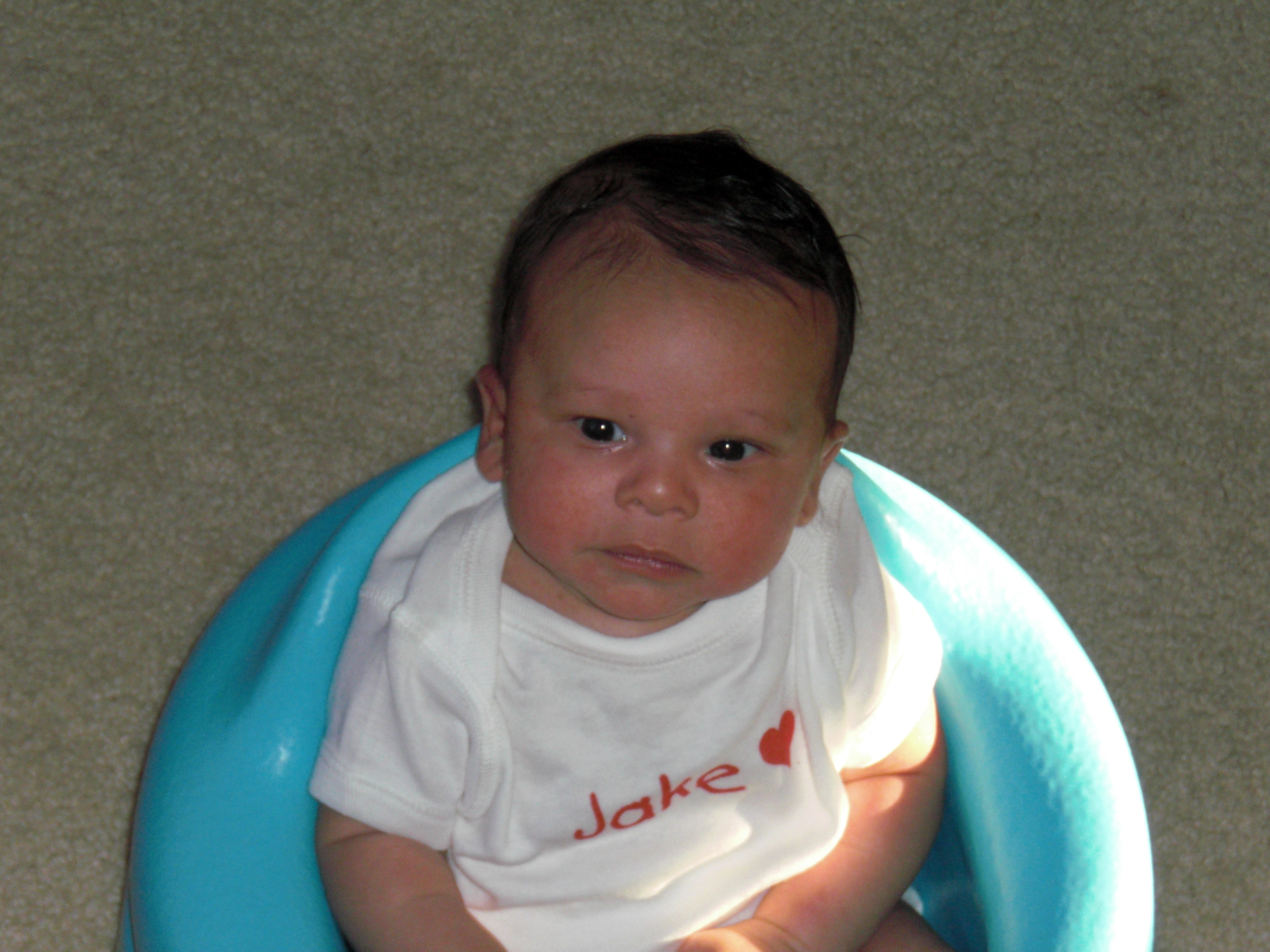
Is this the preschool for the kids who are going to be brain surgeons?

My wife is starting to gear up her search for a preschool for our son. I think there is a lot of peer pressure on moms to get their kids started in the education rat race early on. I’m not sure the pressure on dads is so quite so bad, though I must admit, it is starting to hit me too.

No mom wants her child to be the laggard. No dad ever believes that his child will be the laggard. Dads understand the value of a head start, but the typical father is confident that his child will catch up to all the kids who got a head start on him within the first few laps.

There is a core cockiness in a dad that tells him that his kids don’t really need the extra help that other people’s kids do. A little voice inside says, “I never went to preschool, and I turned out fine.” Well, maybe he did, or maybe going preschool would have given him the extra little boost he needed to really understand the definition of the word fine.

I find myself conflicted between my own core cockiness about my son and my understanding that there are no actual test scores or other hard data supporting this cockiness. Every confident dad can’t be right. There are definitely kids out there in desperate need of extra help, regardless of how high up over his belly Dad pulls his belt when considering his brilliant seedling. This fact is the pin-prick hole in my own cockiness. It lets in the peer pressure to formally educate at once.

It is true that I never went to preschool, but neither did any of my peers. Entering kindergarten, no one was behind because no one was ahead. We were clean slates, basking in our own ignorance. My slate is much dirtier now, but sometimes I still like to bask in my own ignorance. It’s what a boy does. Sometimes my son and I just sit together and bask in our collective ignorance, and wonder if preschool is really right for either one of us.

The first time we ever sat down together to bask in our own ignorance. Nobody does slack-jawed yokel like Daddy does.

For his part, my son is eager to go to school, if for the wrong reasons. I told him that he would go to school to learn to read. “No,” he said. “I think in my school we’ll just play all the time.” That’s okay. Kids are allowed to have the wrong reasons sometimes. And there’s nothing wrong with a three-year-old wanting to play, as long as somebody understands that he needs to learn to read on his breaks from playing.

I’m beginning to believe that there are two types of parents who send their kids to preschool. The smaller group are the ones who buy into the preschool-as-a-stepping-stone-to-Harvard ideal. Since I don’t think the right preschool is going to get my son into Harvard, I belong to the second, larger group. This group is made up of parents like me who don’t want to feel guilty about their kids starting off kindergarten behind the Harvard-bound children.

As a ticket into Harvard, I think preschool is worth nothing. As a salve for assuaging the guilt and fears of a parent, it is worth maybe half of what it costs. Since my son has two parents with guilty consciences to soothe, I guess it adds up to what it should.

Here is what the balance sheet looks like:

Debits

Credits

Cost of preschool tuition First step to Harvard = 0

Soothing Mommy’s conscience = .5 x tuition cost

Soothing Daddy’s conscience = .5 x tuition cost

The fact that I have holes punched through my natural fatherly cockiness actually makes preschool a better value for me. If that cockiness were in its original, unblemished state, the value of soothing Daddy’s conscience would only be something like .25 x tuition cost. This would make preschool more costly than the total of its value.

At 2 months: It's never too early to begin practicing for your Harvard yearbook photo.

The odds say my son will probably not attend Harvard. I don’t think anything he does at age four will change that. If he grows up into a well-balanced, happy person, I don’t really care about Harvard. I just don’t want him to be subject to the same weird looks I get when I say, “I never went to preschool and I turned out fine.”

This miracle will require smelling salts

Two things in life can leave a man utterly shell-shocked. One is war, and it is called a stain upon the fabric of humanity. The other is childbirth, and it is called a miracle.

With the arrival of the new baby growing near, I find myself harkening back to arrival of the last baby—that magical day when my wife squeezed every last drop of blood out of my hand.

It is rumored that childbirth hits the mother even harder than it hits the father. On the birthing day, it was easy for me to believe this. Later, when my wife was making plans for the next one while I was still huddled in a corner, shivering and swatting imaginary flies from my face, it seemed like maybe her scars were more physical than psychological.

Even after it was all over, you can still see the effects of the trauma in my vacant eyes.

The pain a mother endures at the birth of her child is not to be discounted. Nor should the sights a father must bear be shrugged off as insignificant. The sounds that assail the father’s ears are worst of all. It is much easier to avert one’s eyes at a crucial moment than it is to clamp a hand over each ear. It is also more effective, and less moronic.

My big moment of trauma came at the administration of the painkillers. My wife had made the nobly ridiculous decision to forego drugs during delivery. Instead, she planned to rely upon an organic system of pain transference: whenever the pain became intense, she would grab hold of the most conveniently available part of my body and squeeze her pain away.

This plan worked through hours of contractions. Just when her Kung-Fu grip was beginning to make me resemble a wallpaper print of red hand on white background, her fingers tired themselves out. She broke down and called for the epidural.

My wife had previously instructed me on the dangers of the epidural. If they missed by just one inch with the needle, she could be paralyzed. As she explained this, she held her index finger and thumb about a millimeter apart, but she called the space between an inch because she doesn’t go in for those hoity-toity French units of measurement.

I was relieved to see two anesthesiologists enter the delivery room. Ah, I thought, they have weighed the gravity of this moment and have sent their two best men. I helped the nurse pull my wife up and swing her legs over the bed as the two men set up for business behind her back.

The nurse enlisted my help in holding my wife while the drug was administered. It would be crucial, the nurse told me, to hold her very still, in spite of her pain. Though much of the blood had been squeezed out of my arms, I felt confident, now that a team of experts had set to work around my wife’s spine. I was strong, the man of the family. If the woman could take a needle in the back, the man could certainly hold her still.

I held my wife close, pressing my head against hers. I couldn’t see what was transpiring behind her; unfortunately, I could hear everything.

What I had imagined to be two highly-skilled specialists turned out to be one full-fledged anesthesiologist and his trailing apprentice. I’d rather have had a mature second opinion in the room, but as long as there was one well-trained professional at the helm, it should be all right. I didn’t mind if the trainee stood quietly to the side and watched. They have to learn somehow, right?

I had just settled into this conclusion when their voices convinced me that the actual anesthesiologist had handed over the needle to his boy sidekick. I know these can’t be his actual words, but this is what I heard the anesthesiologist say to his little helper: “Here ya go, Skip. Why don’t you give it a whirl this time?”

I started panting. This kid’s virgin jab was aimed at the spinal cord of the love of my life. If he had acted with self-confidence, I would have made it through the ordeal. But he started right in asking questions. Again, this might not be verbatim, but when your loved one’s future is at stake, you hear “Right around this spot, maybe? This side, over here? What’s that, a bone or something?”

It’s difficult to hold someone perfectly still when you are shaking like a leaf. I was squeezing my wife harder than she was squeezing me, which is saying a lot. Why did they have to practice on my wife? Couldn’t that kid go learn someplace else?

The final straw came when the anesthesiologist coached: “No, over a little, a little more. No, that’s too far. Now, up a little. Steady.” And this part I’m not really paraphrasing. I would have protested except that there were too many black dots forming in my vision. They distracted me from what I was about to say, then they began to distract me from standing upright.

I had 10 seconds to leave my feet voluntarily, before they left me. Rather than being macho, and dragging everyone down with me, I did the honorable thing. I turned to the nurse and calmly explained, “I’m about to faint.”

Three months later, and the boy was still concerned that I looked a little peaked.

The stalwart nurse took over my burden. I fell into a chair. Luckily, the apprentice had guessed close enough to the spot and the procedure was over. The nurse eased my wife back into bed before pushing the intercom button. “Man down. Man down,” she announced to the nurses’ station.

The outside nurse understood perfectly. “We’ll send in some juice for the father,” she replied.

Six cups of juice later, my son was born. Manly man that I am, I was back on my feet by then.

My kid is really sharp . . . and I’m running low on bandages

My son can’t stand to see me lying down comfortably. He seems to have some sort of instinctive need to keep me on the lookout for invasions of my personal space when I really just want to relax for a minute. Perhaps this is some holdover from evolution. Maybe lions and cavemen would all have been wiped out by sneaky foes with pointy sticks if the young of the group had allowed the older males to close their eyes and let down their guards for a minute.

Whatever his ancient justification, my son views the sight of me in any kind of reclined position as an invitation to climb all over me. I should say, when I am fortunate he climbs all over me. This is the gentle treatment. When I really need a good bruising, he climbs to the top of some piece of furniture, from where he leaps at me. So far, his strategy has been successful, as we have not yet been driven from our home by a sneak attack of creatures bearing pointy sticks.

Like millions of old lions, I suppose I could grow to live with this helpful effort to keep me ever vigilant, except that the lions must have had softer offspring. My son is the sharpest object we have in our house, and that includes the steak knives. His elbows, knees, and heels never touch me without making me wonder if we have a whetstone for such joints hidden somewhere in his room.

Some of these are almost as sharp as my son's elbows.

And, of course, a boy is going to use his sharpest parts when he needs to dig into the cliff face of his father’s mid-section. I swear I still have dents in my ribs that perfectly match that boy’s elbows. I’ve got two good knee prints in my back, in case the doctor ever needs a map to where my kidneys used to be.

I could probably even write off the dings in my ribs and my back as the occupational hazards of housing a three-year-old. But these are not my most vulnerable parts. I suppose my kidneys can shift over and shack up with some of my better-protected organs for a while, but I’ve got some extremely vulnerable parts that have no place to go. For better or worse, they are planted where God put them. They can’t run and they can’t hide. Together, we all live in fear of that ice pick my son uses for an elbow.

They always take the blood out of the cartoon versions.

I’ve learned to sleep with my hands cupped into a strategic dome of defense. Someday soon, I may start awake to a dislocated finger, but considering the alternative, I will chalk this up as a great victory for both fatherhood and the adaptive genius of evolution.